
Category: Brooklyn News
Update (July 2025):
The 30% Federal Solar Tax Credit will be eliminated for residential solar installations after December 2025 as part of the “Big, Beautiful Bill.” This benefit currently saves NYC homeowners over $15,000 on average for their solar systems. Only systems installed and completed by the end of 2025 will qualify for this incentive.
A typical solar project can take several months from signing to installation. If you’re thinking about going solar, getting started as soon as possible is the best way to guarantee you lock in this significant tax credit before it’s gone.
Get started with a free solar consultation today to secure your tax credit eligibility!
With tax season fast approaching, you may be thinking about what tax incentives are available for residential solar. One of the best tax credits to take advantage of right now is the Federal Solar Investment Tax Credit (ITC), otherwise known as the federal solar income tax credit or federal residential energy credit. Here’s what you need to know about how the federal solar tax credit works.
Disclaimer: Brooklyn SolarWorks are not financial professionals. As much as we’ll always strive to provide our customers with the most accurate information regarding solar tax incentives, we are not tax experts. Please consult your tax advisor for guidance on filing for credits with respect to your specific circumstances.
What is the federal solar tax credit?
The federal solar income tax credit allows homeowners to deduct up to 30% of their solar system installation costs from their federal income tax. This is a dollar-for-dollar reduction in the amount of income tax you owe to the federal government. If the credit exceeds a taxpayer’s single year tax liability, they can divide the credit over multiple years. This credit is available for residential and commercial installations, but each has different guidelines.
The solar ITC was established by the federal government in the Energy Policy Act of 2005, and has been instrumental in incentivizing residential solar. In fact, SEIA estimates that the ITC has expanded the solar industry by 10,000 percent. Additionally, a study by SolarReviews.com found that the ITC is the single most important financial incentive for U.S. homeowners to invest in solar. Because of its popularity, it has been extended multiple times over the past 15 years.
Most recently, the 30% federal tax credit was extended in August 2022 for an additional 10 years. The credit will then step down to 26% in 2033, and 22% in 2034.
Is there a difference between the federal solar tax credit and the solar investment tax credit (ITC)?
You may see “federal solar tax credit” and “solar investment tax credit” – or a combination of the two – in different places. “Investment Tax Credit” is the given name of this credit, but some may refer to it as the “federal solar tax credit” in shorthand. The form that you’ll file to claim this credit refers to it as the Residential Energy credit. For all intents and purposes, these are all the same.
How do I know if I’m eligible to claim the federal investment tax credit for solar?
Pay Income Taxes
First and foremost, in order to claim any income tax credit with the federal government, you must be paying income taxes.
Ownership of Solar System
The most important criteria for determining your eligibility for the solar ITC is ownership of the system. You must own your system outright in order to claim this credit. You are not eligible if you lease your solar system or enter into a power purchase agreement.
Installation Location and Timeline
The solar system that you claim should be installed on either your primary or secondary home in the U.S. A “home” is defined by the IRS as “where you lived” during the tax year – this can be a house, houseboat, mobile home, co-op, condo, or other form of housing.
You will file for this credit when you do your taxes for the year your system was installed. For example, if your system is installed in 2022, you will file for the credit when you do your 2022 taxes.
Income Bracket
You may wonder if this credit only applies to a certain income level. It does not! Taxpayers from all tax brackets can claim the ITC on their federal taxes.
Qualifying Expenses
In past iterations of the ITC, there has been some gray area as to what expenses are covered by the credit. However, the IRS currently has a clear definition of qualifying expenses:
“You may be able to take a credit of 26%* of your costs of qualified solar electric property…Include any labor costs properly allocable to the onsite preparation, assembly, or original installation of the residential energy efficient property and for piping or wiring to interconnect such property to the home.
…Qualified solar electric property costs are costs for property that uses solar energy to generate electricity for use in your home located in the United States.”
By this definition, the following expenses are covered:
- The cost of the system, including panels, racking, inverters, and other equipment
- Labor costs, including installation and permitting and inspection fees
- Solar batteries
- Any applicable sales taxes
Despite a clear definition, there is still some disagreement when it comes to roof replacement costs. Some solar installers may tell you that you can replace your roof in tandem with installing solar panels and claim the roof replacement costs under the ITC. It is our interpretation that roof replacement is not a qualifying expense.
In its definition of qualifying expenses pictured below, the IRS clearly states that “structural components such as a roof’s decking or rafters that serve only a roofing or structural function” do not qualify for the credit. You can find the highlighted section of the tax code here.

*This quote was taken from the 2021 tax code, when the tax credit only accounted for 26% of installation costs. As of August 2022, it was boosted to 30%.
When can I claim the solar tax credit?
You are eligible to claim the federal solar tax credit for the year in which your system was installed. If your system is installed in 2022, you’ll claim the credit when filing your 2022 taxes. If you do not have enough tax liability to use the credit in just one year, you can divide the credit over multiple years.
How much is the solar tax credit?
The federal solar tax credit covers 30% of your installation costs. In 2033, the credit will drop to 26% and then 22% in 2034.
How to Claim the Federal Solar Tax Credit
To claim this credit, you’ll need to file IRS Form 5695 for Residential Energy Credits in addition to Form 1040 and any others applicable to your situation. This form calculates tax credits for a variety of energy efficient home improvements, including residential renewable energy.
There are essentially three main steps to take when filing for the federal solar tax credit:
- Determine your total tax liability for the year. This will tell you whether or not you can use the entire credit in one year or if you’ll be able to carry it forward.
- Complete Form 5695, following the instructions to calculate your tax credit amount. Completion of this form will also tell you how much of the credit you’ll be able to carryover if applicable.
- Add the result of Form 5695 to Schedule 3 of your Form 1040.
Though we strive to provide the most accurate tax information to the best of our knowledge, we are not tax experts. Please consult your tax advisor for more guidance on filing for the ITC.
Using the Federal Solar Tax Credit with Other Incentives
Along with the ITC, there are several New York State solar incentives available. In addition to the federal solar tax credit, NYC solar customers can file for the following state and city solar credits and rebates:
- NYC Property Tax Abatement
- New York State Solar Income Tax Credit
- New York State Solar Rebate
- NYS Historic Homeownership Rehabilitation Tax Credit (dependent upon your neighborhood)
When combined with the ITC, these incentives can cover over 75% of the cost of your solar system.
Other Federal Solar Tax Credit FAQs
Can I claim the federal solar tax credit more than once?
Yes. If your total tax liability from the initial year you filed for the ITC was less than the credit amount, you can claim any carryover credits the following year. The credit can be used over multiple years depending on your tax liability.
Is the solar tax credit refundable?
No, the ITC is a nonrefundable credit. If the credit exceeds your tax liability for the year, the difference won’t be added to your tax refund. Instead, you can use the excess credit amount on the following year’s income taxes.
Can I claim the solar tax credit on a rental property?
Generally, no. The residential solar ITC applies to the home that you live in.
If you live in your rental property for a portion of the year, you can claim the credit – but you will have to reduce the credit amount to reflect the amount of time you lived there. For example, if you lived in your rental property for three months, you can claim 25% of the credit (to reflect the 25% of the year that you lived there).
Is the federal solar tax credit expiring?
The credit will be available until at least 2034. In August 2022, the federal government extended the 30% credit for 10 years, after which the credit will begin to step down. In 2033, it will be 26%, then 22% in 2034.
The Federal Solar Tax Credit for Homeowners in New York City
The federal solar tax credit is just one of several excellent financial incentives available to New Yorkers. When combined with state and local tax incentives and rebates, more than 75% of the cost of your solar system is covered. Like any home improvement project, solar is a big investment – but unlike an addition to your house, for example, the financial benefits of solar are available to you almost immediately.
Though the initial price tag may seem out of reach, a solar installation in NYC is more affordable than you think.
If you’ve been considering solar, now is the time to flip the switch. Take advantage of solar tax incentives at their peak – schedule a free consultation to get started today.
In 2015, Brooklyn SolarWorks landed in Gowanus with a mission to bring innovative and affordable solar to the rooftops of NYC. We’ve overcome barriers to develop industry-leading approaches to permitting, design, and installation that are specifically adapted to New York City.
Now, solar power is transforming how New York City’s co-ops manage energy costs and sustainability goals. With rising utility rates and strict carbon emission laws like Local Law 97, co-op owners are increasingly exploring solar as a way to reduce expenses, boost property values, and ensure compliance with local regulations.
This guide provides everything you need to know about solar energy for NYC co-ops, from roof compatibility and installation options to navigating NYC building codes and financial incentives.
Background of Solar in NYC
For many years, solar contractors in the area embraced installation methods and system designs that were not developed for the typical New York City building. Unlike the NYC suburbs, buildings here in the city have many unique features, such as:
- Surrounding buildings
- Skylights
- Hatches
- HVAC equipment
- Required FDNY fire paths
Despite NYC’s dense urban landscape, innovative solar solutions such as canopies, tilt racks, and ballasted systems have made it possible to maximize solar potential on flat and limited rooftop spaces. As more co-ops recognize the long-term benefits of solar, the closer the city grows towards its climate goals of reaching net-zero carbon emissions by 2050.
How to Know if Your Roof is Compatible with Solar
Not all roofs are ideal for solar installations. For co-op owners, determining roof compatibility is a crucial first step. Key factors include:
- Workable Roof Size and Space: Larger roofs provide economies of scale and better ROI.
- Structural Integrity: The roof must support the additional weight of solar panels.
- Roof Condition: Older or damaged roofs may need repairs or replacement before installation.
- Shading: South-facing roofs with minimal shading yield the best results.

In order to know for sure if your roof is fit for solar, it is important to get the roof surveyed by a certified solar professional.
Want to know if your building is compatible with solar? Schedule a free consultation today!
Solar Design Options
Installing solar in New York City– especially those with obstructions like hatches, skylights, and required FDNY fire paths – requires a bit more creativity than other solar designs. Luckily we have created multiple design options for co-op solar installations, depending on their roof structure and needs:
Canopy

The Brooklyn Solar Canopy is a revolutionary design tailored for NYC’s flat roofs. This award-winning innovative structure elevates solar panels above roof obstructions and fire safety paths while creating usable rooftop spaces for amenities like green roofs or decks. Its functional and aesthetic appeal has made it a favorite for co-ops, offering a way to maximize energy generation without sacrificing usability. It’s so popular that we now distribute our solar canopy to other installers all over the country through a separate company, Brooklyn Solar Canopy Co.
Tilt Rack

Tilt rack systems are ideal for flat roofs where a canopy may not fit the building’s aesthetic or functional goals. These systems elevate panels at an optimal angle to capture sunlight while maintaining proximity to the roof. By allowing flexibility in panel placement, tilt racks work around obstructions like vents or skylights, ensuring maximum energy production.
Ballasted

For buildings seeking a non-invasive approach, ballasted systems offer an excellent solution. These designs use weighted mounts to secure the panels without penetrating the roof, preserving its integrity while ensuring stability.
Traditional Solar Panel Installation

Traditional solar designs for pitched and sloped roofs integrate solar panels seamlessly with the roof. Panels are installed flush with the roof surface, providing a streamlined appearance. This option works best for co-ops with traditionally sloped roofs and ample sunlight exposure.
Financial Benefits of Solar for NYC Co-ops
Solar energy provides co-ops with substantial long-term financial advantages that go beyond just energy savings. By investing in solar, co-op owners can take control of their energy costs, protect against rate hikes, and increase property value while benefiting from low maintenance costs and incentives.
How Solar Protects Against Utility Rate Hikes in NYC
Utility rates in NYC have consistently risen over the years, with no signs of slowing down. By switching to solar, co-ops can shield themselves from unpredictable Con Edison rate hikes. Solar systems generate clean, renewable energy on-site, allowing buildings to offset their reliance on grid power. This not only stabilizes energy costs but also locks in predictable savings for the next 25–30 years, ensuring financial security for co-op owners.
Low Maintenance Costs of Solar Systems
One of the most appealing aspects of solar energy is its low maintenance requirements. Modern solar systems are designed for durability and longevity, requiring minimal upkeep throughout their lifespan.
To ensure your solar system is at peak performance, Brooklyn SolarWorks provides a 24/7 monitoring system as part of our warranty package. Our team actively monitors our entire fleet of solar systems on a regular basis, and are alerted in case of any irregularities in system functionality. System owners also have access to monitor their panels as well.
Additionally, Brooklyn SolarWorks includes an industry leading 30-year total system warranty AND a power production guarantee, minimizing out-of-pocket expenses for co-ops. This low-maintenance advantage ensures co-op owners enjoy consistent energy savings without added hassle.
Boosting Property Value with Solar Energy
According to an April 2019 study by Zillow.com solar homes sell on average at 4.1% higher than comparable homes without solar. The study also found that the solar boost was higher in the NYC metro area than the national average, topping out at 5.4%. That’s an extra $23,989 in value for solar property owners in the five boroughs. The study corroborated similar findings of an early report funded by the U.S. Department of Energy.
Co-op buildings with solar energy systems are more marketable and competitive in NYC’s real estate landscape, offering long-term benefits that far outweigh the initial investment. For co-op owners, solar provides a unique opportunity to enhance their property’s financial and environmental appeal.
Want to learn more about the benefits of solar? Schedule a free consultation today and start saving for decades to come!
Solar Panel Installation Cost
Determining the cost of a solar panel installation for NYC co-ops depends on multiple factors, making it more complex than in other regions. Factors such as roof type, system size, incentives, and energy consumption patterns all play a role in shaping the final price. Unlike other areas, where pricing may be more standardized, NYC’s unique urban environment and stringent regulations require specialized solar design solutions.
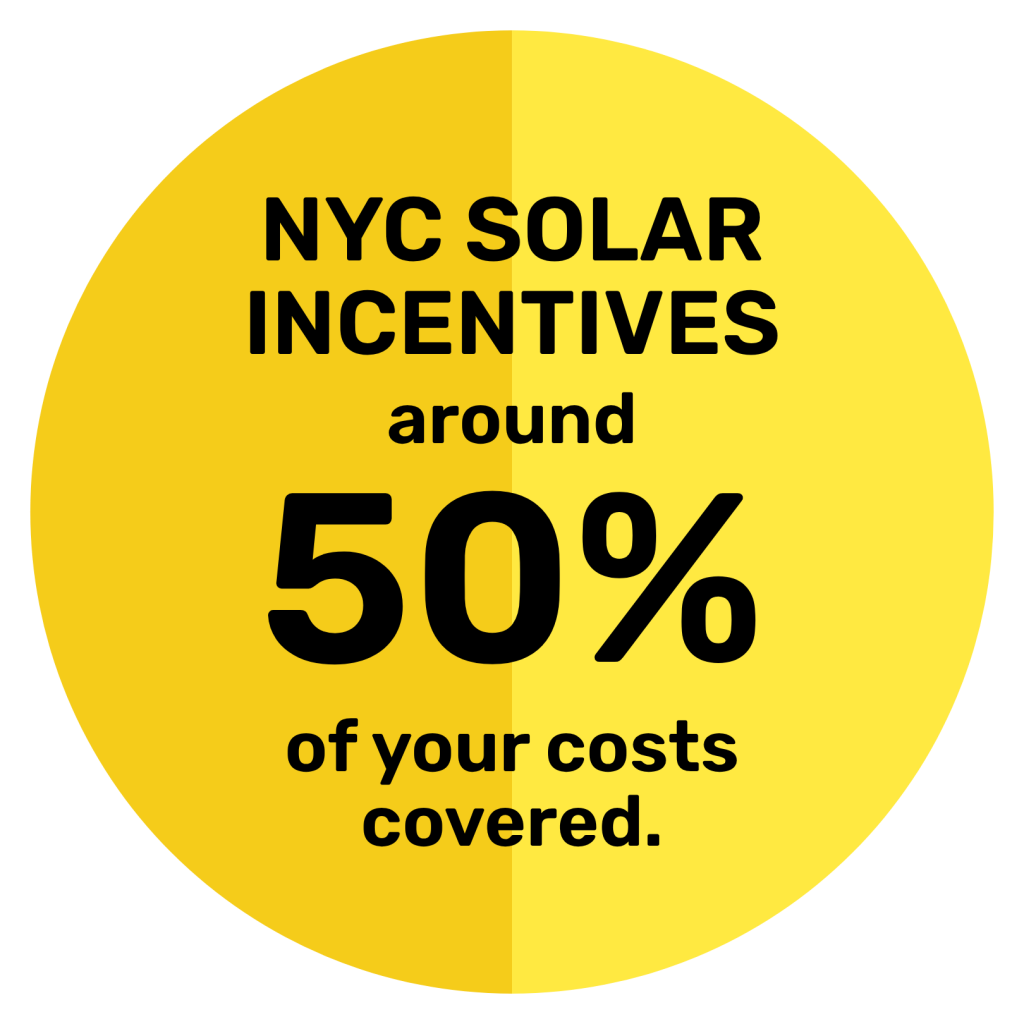
NYC’s solar market stands out as one of the most incentivized in the country. Programs like NYSERDA rebates and a property tax abatement collectively cover around 50% of a system’s cost. On top of these incentives, some NYC buildings (including HDFC co-ops) qualify for additional rebates. These robust financial incentives make solar a feasible investment for many co-ops, allowing them to transition to renewable energy without bearing a significant upfront financial burden.
Although the initial cost may seem high, it’s crucial to view solar as a long-term investment. Solar installations not only reduce utility bills but also increase property value over time. For co-ops in NYC, the payback period typically ranges from 4 to 6 years, and the cumulative energy savings can exceed $150,000 over the system’s lifespan. These benefits, combined with the ability to avoid penalties under Local Law 97, make solar an increasingly popular choice among NYC co-ops.
For a personalized estimate and to explore incentives specific to your co-op, schedule a free consultation today.
Navigating NYC Building Codes and Solar Installation Regulations
New York City’s building codes and regulations can feel overwhelming, but understanding these requirements is essential for a smooth and successful solar installation process. From carbon emission laws to permitting procedures, NYC co-op owners must address several key factors before proceeding with solar.
Complying with Local Law 97
Local Law 97 is a critical regulation that sets strict carbon emission limits for NYC buildings larger than 25,000 square feet. Under this law, co-ops that fail to reduce emissions below the defined limits may face significant financial penalties.
Solar energy provides a practical solution by reducing reliance on fossil fuels and lowering emissions. By installing solar panels, co-ops can offset their energy usage, achieve compliance with Local Law 97, and avoid steep fines while improving their building’s overall sustainability.
How Roof Warranties and Building Codes Affect Solar Installations
Roof warranties are a common concern for co-ops considering solar. Solar panel installations must be designed and implemented carefully to ensure the roof warranty remains intact. That’s why we offer non-invasive solutions, such as ballasted systems, that avoid roof penetrations while maintaining structural stability.
Additionally, NYC building codes require solar installations to meet strict safety, fire, and structural standards. Working with experienced local installers ensures compliance with these codes and minimizes the risk of costly delays or issues all while getting the best solar system possible.
Addressing Permitting Challenges
The permitting process can be complex and time-consuming. Luckily, we’ve created a turn-key business model, meaning it’s on us, the installer, to manage all permits and permissions on behalf of the customer with the city, Con Edison, and all other entities. Because of the time it takes to permit a project, the installation process takes about 4-6 months to complete from contract signing. During that time, the customer is required to do almost nothing until the day of the installation.

How to Bring Solar Power to Your Co-op Board
Installing solar on your co-op building will require approval from all of the decision-makers in your building. Bringing solar power to your co-op board will involve careful preparation and clear communication about how solar will benefit residents.
Educate Your Co-op Board on Solar Benefits
Start by educating the board about the benefits of solar energy, both financial and environmental. Emphasize how solar can reduce operating costs, protect against rising utility rates, and help the building comply with Local Law 97 to avoid penalties.
Present Financial Data to Stakeholders
To build support, present detailed ROI and payback period data that demonstrate the financial feasibility of solar installations. Highlight that the average payback period in NYC is just 4–6 years (compared to the national average of 7-10 years) and that co-ops can save $5,000–$10,000 annually on energy costs.
Understand Incentives that Make Solar More Accessible for Co-ops
Financing is often a key concern for co-op boards. Luckily, NY solar incentives can help cover around 50% of the total system cost come tax season.
By presenting a comprehensive case and addressing potential concerns, you can successfully bring solar power to your co-op board and move toward a more sustainable and cost-effective energy solution.
If you need help gathering this data, schedule a free consultation with us today. We are always excited and ready to present to a Co-op board! Start the conversation.
Solar Story: David, Park Slope
Meet David, Treasurer of his 8-unit co-op in Park Slope, Brooklyn. He shares how going solar with Brooklyn SolarWorks not only helps the environment but also provides significant savings to residents of his building. With the help of state incentives and expert analysis, David’s co-op saved 81% of the initial installation costs, and the financial benefits have exceeded expectations. Watch his full story to learn how solar power is transforming his building and helping them save on energy costs. 💡
How to Choose the Right Solar Installer
Selecting the right solar installer is a critical step in ensuring a successful transition to renewable energy for your co-op. Unlike typical home improvement projects, solar installations in NYC require expertise not only in solar technology but also in navigating the city’s complex building codes, permitting processes, and unique structural challenges.
A reliable solar installer should offer more than just high-quality products; they should act as a partner throughout the entire process. From the initial consultation and feasibility studies to securing permits and completing the installation, your chosen provider must demonstrate a thorough understanding of NYC’s specific requirements. Look for companies with a proven track record in urban solar installations and an in-depth knowledge of local laws, such as Local Law 97.
We’ve built our business from top to bottom to do all of these things for each and every customer of ours – contact us today!
Solar Warranty and Maintenance
When you invest in a solar system, you want assurance that it will perform reliably for years to come. That’s why reputable solar installers offer robust warranties and straightforward maintenance processes. At Brooklyn SolarWorks, all our systems come with a comprehensive 30-year warranty, covering panels, inverters, and overall system performance. We even include a production guarantee, ensuring that if your system underperforms, you’ll receive compensation for the lost savings.

Surprisingly, solar panels require minimal maintenance thanks to their durable, low-maintenance design. With no moving parts, the risk of mechanical failure is virtually eliminated. Panels are typically angled to allow rainwater to naturally wash away dirt and debris, so you don’t need to worry about regular cleaning. If you choose to clean them, avoid abrasive tools or detergents that could scratch the glass.
Snow removal is also unnecessary, as most systems are designed to handle winter weather conditions. Snow naturally melts or slides off, and the minimal power loss during snowy periods is not worth the risk of climbing onto an icy rooftop.
There’s not much you’ll need to do for solar panel maintenance. Solar systems are equipped with remote monitoring, allowing you and your installer to track performance effortlessly. This hands-off maintenance approach ensures that you can enjoy decades of clean, cost-effective energy without the hassle.
FAQs About Solar Energy for NYC Co-op Owners
Co-op owners often have many questions about the logistics, costs, and benefits of solar energy. Here are answers to the most common inquiries to help guide your decision-making process.
What does solar installation cost for co-ops?
The cost of installing solar panels for co-ops varies based on factors like system size, roof type, and energy consumption. However, NYC co-ops benefit from a variety of incentives, including NYSERDA rebates and property tax abatements, which can significantly reduce upfront costs around 50%. On average, co-ops in New York City can expect a payback period of 4–6 years, making solar a highly cost-effective investment.
What incentives are available to NYC co-op owners?
NYC co-ops have access to generous incentives that make solar installations more affordable. The NYSERDA rebate is one of the most significant, with commercial buildings receiving rebates up to four times higher than residential properties. Additionally, co-ops can take advantage of the NYC’s property tax abatement, further lowering the overall investment.
How does solar installation impact the roof?
Co-op owners often worry about how solar panels will affect their roofs. Fortunately, modern installation techniques, such as ballasted systems, are designed to preserve roof integrity by avoiding penetrations. Most solar providers also offer roof warranties to ensure the roof remains protected throughout the system’s lifespan. In fact, solar panels can extend a roof’s lifespan by shielding it from weather and UV exposure.
Get Started with Solar for Your NYC Co-op
Taking the leap toward solar energy for your NYC co-op is not just an investment in cost savings; it’s a commitment to sustainability, resilience, and forward-thinking property management. From compliance with Local Law 97 to long-term financial stability and increased property value, solar power offers so many benefits that make it a smart, impactful choice for co-op owners across the city.
If you’re looking to install solar on your New York City co-op, trust an expert. Brooklyn SolarWorks has been designing and building innovative solar systems for NYC since 2015, with over 3,000 complete projects.
Ready to get started? Schedule your free consultation.
A Message from the Brooklyn SolarWorks Team
Brooklyn SolarWorks has shown resilience and determination through every election cycle, and we will continue to drive the conversion from fossil fuels to renewable energy in New York City under President Trump’s leadership. We believe President Trump’s commitment to increasing oil and gas production is counterproductive in the fight against climate change, and we feel skeptical that he will support our nation’s transition to clean energy.
The Federal Solar Tax Credit, which incentivizes residential and commercial solar installations, was set to be phased out by 2023 due to the Trump administration’s inaction during his first term. Fortunately, the Biden Administration’s Inflation Reduction Act (IRA) boosted and extended the credit, and provided Americans with a host of other clean energy incentives. Although we can’t say for certain at this time, it is possible that the incentives provided by the IRA could be at risk again during President Trump’s second term.
These incentives, however, are still in place for now, offering us a unique opportunity to harness their potential. New Yorkers can and should take advantage of the law while they can.
Regardless of what lies ahead at the federal level, we feel fortunate to have the support of our city and state, both of which are continuously making strides in clean energy deployment and leading the nation in climate policy.
New Yorkers deserve more sustainable buildings, healthier air, and more green jobs. We stand by our commitment to make renewable energy accessible to all New Yorkers regardless of change in direction of national policy. We’ll continue to advocate for bold, transformative changes that may seem daunting today, but will pave the way for a brighter tomorrow.
Now is the time to continue the progress we’ve made in New York City and take advantage of federal solar incentives while you still can. If you own property in the five boroughs, now is your chance to make an impact. Schedule a free consultation with our team to learn about your options and get started.
Shine on,
The Brooklyn SolarWorks Team
Clean energy holds immense importance for nonprofits in New York City. By embracing renewable energy solutions such as solar power, nonprofits can not only reduce their environmental footprint but also strengthen their organizational resilience and deepen their impact on the communities they serve.
Read to learn more about the benefits of solar panels for nonprofits in NYC and find out if it makes sense for your organization!
Can Nonprofits get Solar Panels in NYC?
New York City nonprofits play a crucial role in serving communities and addressing societal needs. However, amidst the challenges they face, one question arises: Can nonprofits harness the power of solar energy to push their missions forward? The short answer is yes.
Now, not every roof in NYC is suitable for solar. Just like residential homes and businesses, nonprofit roofs need to be assessed. The ability to go solar depends on factors like energy usage, sun exposure, and roof space. What sets the stage for NYC-based nonprofits to make the switch to solar is the array of super-rich incentives that make solar panel adoption not only possible but highly affordable.

Want to see if your roof is fit for solar and what incentives you qualify for? Schedule a free consultation!
Benefits of Solar Panels for Nonprofits
Cost-Saving Benefits
Nonprofits often operate on tight budgets, with every dollar allocated to critical programs and services. Clean energy, such as solar power, offers a sustainable solution to reduce energy expenses. By generating electricity from renewable sources, nonprofits can lower and stabilize their utility bills, freeing up funds to invest in their core missions and better serve their communities.

Environmental Impact
In 2019, to combat the ever-looming climate crisis, New York City put in place the Climate Mobilization Act (CMA). The CMA will put NYC on the path to reducing building carbon emissions by 40% by 2030 and by 80% by 2050. For NYC-based nonprofits, running operations on clean energy can substantially reduce their carbon footprint, aligning not only with their practices with sustainability goals but the city’s as well.
Enhancement of Public Image
Public perception plays a crucial role in the success of nonprofits. Embracing clean energy initiatives, such as installing solar panels, enhances the public image of nonprofits as forward-thinking and socially responsible organizations. This can attract positive attention from donors, volunteers, and the broader community, bolstering support and amplifying the nonprofit’s impact.
Raise Awareness About Sustainability
Clean energy initiatives offer nonprofits valuable educational opportunities to engage with their communities and raise awareness about sustainability. Through programs, workshops, and outreach efforts centered around renewable energy, nonprofits can empower individuals to take action towards a greener future, fostering a sense of environmental stewardship and collective responsibility.

Long-Term Stability
Investing in clean energy provides nonprofits with greater stability and resilience in the face of fluctuating energy prices and regulatory changes. By generating their own renewable energy on-site, nonprofits can hedge against future Con Edison rate increases, ensuring more predictable operating expenses over the long term. This stability fosters organizational sustainability and strengthens the nonprofit’s ability to fulfill its mission in the years to come.
Solar Incentives for Nonprofits in New York
Federal Investment Tax Credit Direct Pay
Nonprofits in NYC can take advantage of the Federal Investment Tax Credit, which offers a tax credit equal to 30% of the post-rebate cost.
Unlike homeowners and for-profit businesses, tax-exempt entities like nonprofits are eligible for a direct pay option, meaning they can receive a cash payment for the value of the tax credit instead of using it to offset tax liability.
NYSERDA Solar Rebate
Nonprofits in NYC can also take advantage of the NYSERDA Solar Rebate, receiving $1.00 per watt for solar installations. This rebate further offsets the initial investment, making solar energy even more accessible for nonprofits.
Steps to Acquire Solar Panels for Nonprofits in NYC
Work with a Reputable Local Installer
Partnering with a reputable local installer, like Brooklyn SolarWorks, ensures quality workmanship, expertise in navigating local regulations, and ongoing support for your system.

Analyze Energy Needs and Potential Savings
Collaborate with your installer to analyze your organization’s energy needs and potential cost savings from solar panels. This helps in determining the optimal system size and design. You can get all of these answers and more by setting up a free consultation today!
Conduct Site Evaluation for Solar Panel Installation
Ensure your building is suitable for solar panels by conducting a thorough site evaluation with your installer. Factors such as roof orientation, shading, and structural integrity should be assessed.

Secure Funding and Determine Incentive Eligibility
Securing the necessary funding for your solar project is essential to its success. Explore various financing options, including grants, loans, and fundraising campaigns, to cover the upfront costs of solar installation.
Additionally, work closely with your accountant to determine your nonprofit’s eligibility for solar incentives, such as the Federal Investment Tax Credit and NYSERDA Solar Rebate. By leveraging these incentives, you can significantly reduce the financial barriers to solar adoption and accelerate your organization’s transition to clean energy.
Funding Solar Projects for Nonprofits
Funding solar projects can bring about many challenges for local nonprofits. The upfront costs for solar and assessing your financing options can be daunting.
Luckily, NYC is a place that is rich with solar incentives. By signing up for your free consultation with Brooklyn SolarWorks, we will be able to help you navigate what government incentives you qualify for as well as different payment options available for your project.
Besides incentives and financing, nonprofits can also fund their solar projects through the means of crowdfunding, fundraising, and community partnerships.
Getting the local community involved in fundraising for your solar project also brings many other benefits like:
1. Building Awareness
Engaging the community raises awareness about the benefits of solar energy and the importance of sustainability, garnering support for solar projects.
2. Mobilizing Support
Community engagement mobilizes financial contributions, volunteer efforts, and in-kind donations to support solar initiatives, helping nonprofits reach their fundraising goals.
3. Fostering Collaboration
Collaborating with local stakeholders fosters partnerships and collective action, enabling nonprofits to pool resources and leverage community support for solar projects.
4. Demonstrating Impact
Community involvement demonstrates grassroots support and showcases the positive impact of solar projects, enhancing the credibility and effectiveness of nonprofit initiatives.
Find Out if Solar is Right for Your Nonprofit
The benefits of solar panels for nonprofits in NYC are ever-growing, ranging from cost savings to environmental stewardship and enhanced public image. With a wealth of incentives available and a clear roadmap for implementation, nonprofits can harness the benefits of solar energy to advance their missions and create a brighter, cleaner future for all.
Take the first step today by securing your free consultation and join the clean energy revolution!
The Gowanus Canal, a waterway that goes through the heart of Brooklyn, is famous for its rich history and copious amounts of industrial pollution. However, recent efforts have been underway to clean up the canal’s murky waters and revitalize its surrounding ecosystem.
In honor of Earth Month, we’re highlighting environmental issues that hit close to home (so close we can smell it from our office). Read on to learn about the canal’s past, present, and future and how you can contribute to a cleaner NYC.
History of the Gowanus Canal in Brooklyn
Dating back to the 1860’s, the Gowanus Canal was built to extend the industrial transportation route of the Erie Canal and New York Harbor into Brooklyn (the third largest city in America at the time). Businesses began to populate around the canal. Some of the popular industries around the canal included cement works, chemical plants, ink and paint factories, incinerators, and Manufactured Gas Plants (MGP).

This rapid industrialization of the canal led to rampant pollution (untreated industrial waste, raw sewage, surface water), turning the canal into one of the most polluted waterways in the United States.
To try and combat the growing pollution in the waterway, a “Flushing Tunnel” was created in 1911 to replace the stagnant canal water with fresh, oxygen-rich water to improve water quality. This plan worked well until the 1960s when a mechanical failure caused it to shut down. The New York City Dept. of Environmental Protection restored and reactivated the Flushing Tunnel in 1999. Upgrades were last made in 2014.
What’s the Current State of the Gowanus Canal?
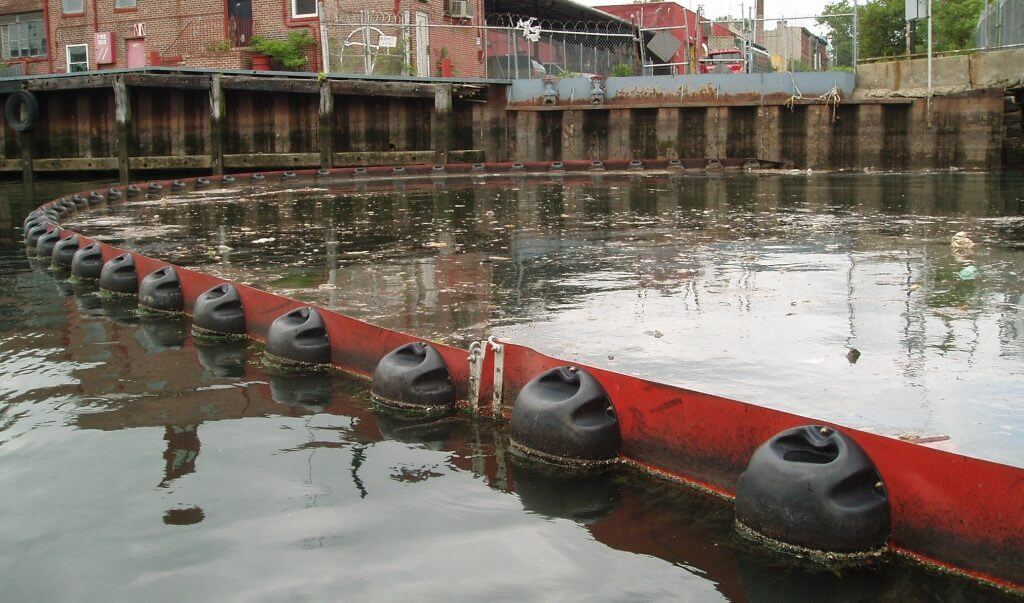
Over the years, industrial runoff, sewage discharge, and other pollutants have accumulated in its waters, leading to high levels of toxins and heavy metals. The canal’s murky waters are devoid of marine life, and foul odors often permeate the surrounding area. Despite efforts to mitigate pollution, the Gowanus Canal remains one of the most polluted water bodies in the United States.

In April 2009, the US EPA proposed that the Gowanus Canal be placed on the National Priorities List (NPL). NPL is a roster of hazardous waste sites in the United States that are eligible for long-term remedial action (cleanup) under the Superfund program.
Impact of the Canal’s Environmental Contamination in NYC
Over decades of industrialization and neglect, the Gowanus Canal has become heavily contaminated with a variety of pollutants, including heavy metals, PCBs (man made chemicals), coal tar, and raw sewage. As a result, its environmental impact extends beyond the canal itself to its surrounding area in various ways.
Water Quality
The canal’s water quality is severely degraded, with high levels of toxins and pollutants. This contamination poses risks to aquatic life and public health, affecting both the canal ecosystem and nearby water bodies connected to it.
Ecosystem Degradations
The Gowanus Canal’s polluted waters have led to the decline or absence of many species of plants and animals. Habitats along the canal’s banks have been degraded, reducing biodiversity and ecological resilience.
Soil Contamination
Pollutants from the canal can seep into the surrounding soil, posing risks to human health and limiting land use options for nearby properties. Soil contamination may also affect urban agriculture and gardening initiatives in the area.
Health Risks
Exposure to pollutants from the Gowanus Canal can pose serious health risks to humans, including respiratory problems, skin irritation, and long-term health effects such as cancer. Residents and workers in the vicinity of the canal are particularly vulnerable to these risks.
Benefits of Cleaning Up the Gowanus Canal
Despite the challenges, efforts to clean up the Gowanus Canal offer numerous benefits for the community and the environment.
Reduce Pollution
Cleaning up the canal will significantly reduce pollution levels, improving the quality of water and air in the surrounding area.
Habitat Restoration
Restoring the health of the Gowanus Canal will create a conducive environment for diverse plant and animal species to thrive once again.
Reduced Greenhouse Gas Emissions
By mitigating pollution and restoring surrounding ecosystems, cleaning up the Gowanus Canal will help reduce greenhouse gas emissions and combat climate change. Local Gowanus businesses and residents are also helping to cut down greenhouse gas emissions by installing solar power and reducing their use on fossil fuels.

Safer Recreational Activities
A clean and healthy Gowanus Canal will provide residents with safer opportunities for recreational activities such as boating and fishing.
Increased Property Values
Revitalizing the Gowanus Canal area will lead to increased property values, benefiting homeowners and local businesses.
Increased Public Access
A cleaner canal will enhance public access to waterfront spaces, creating opportunities for community engagement and enjoyment.
Ongoing Gowanus Canal Clean-Up Initiatives and Projects
Numerous initiatives are currently underway to clean up the Gowanus Canal and restore its ecological integrity.
Superfund Site Dredging and Capping
The Environmental Protection Agency (EPA) has designated the Gowanus Canal as a Superfund site, facilitating dredging and capping activities to remove contaminated sediments and prevent further pollution. Goodbye Black Mayonnaise!

Turning Basin Restoration
Efforts are underway to restore the historic turning basins of the Gowanus Canal, enhancing its navigability and ecological function. Contaminated material will be removed from the 1st Street turning basin and a portion of the 5th Street turning basin will be dredged and restored.
Combined Sewer Overflow (CSO) Control
Efforts to address the issue of combined sewer overflows in Gowanus include infrastructure upgrades, such as the construction of storage tanks and green infrastructure to capture and treat stormwater before it enters the sewer system. By addressing the problem of combined sewer overflows, stakeholders hope to mitigate pollution and restore the ecological health of the Gowanus Canal.
Community Involvement and Education
Community involvement and education initiatives play a crucial role in raising awareness about the importance of cleaning up the Gowanus Canal and engaging residents in restoration efforts. The Gowanus Canal Conservancy has a lot of educational resources pertaining to the canal including curriculums that teach the history, health, and ecology of the canal, green infrastructure design, and more.
Plans for the Gowanus Canal after Cleanup is Complete
Once the cleanup of the Gowanus Canal is complete, plans include transforming the area into a vibrant waterfront destination with parks, green spaces, and mixed-use developments that prioritize sustainability and environmental stewardship.

Rendering of headhouse for the first underground storage tank located near Nevins Street, Butler Street, and Degraw Street. It will hold 8 million gallons of combined sewage during rainstorms.
Contribute to a Cleaner NYC Today!
You can play a part in cleaning up the Gowanus Canal and contributing to a cleaner New York City by supporting local environmental organizations, participating in community clean-up events, advocating for sustainable practices, and spreading awareness about the importance of protecting our waterways. By working together, we can ensure that future generations can enjoy a cleaner, healthier Gowanus Canal and a more sustainable city for all.
Are you a local Gowanus resident looking to make an impact on your neighborhood? Solar could be the solution! Find out if solar’s right for you by scheduling a call with our team.
A $23 billion market opportunity incites increased NOI driving cap rates and real estate values in NYC
Mayor Adams’ City of Yes zoning initiatives are modernizing New York City’s zoning regulations to move the city towards more equitable and sustainable living. The landmark legislation, which features a Carbon Neutrality zoning amendment (COYCN), was passed into law this week relaxing restrictions on solar developments, furthering both the city and state’s efforts toward carbon neutrality.
The new zoning regulations abolish the coverage and setback restrictions for rooftop solar installations which have historically hampered the expansion of clean energy developments. With the setback regulations pardoned for solar installations, huge swaths of real estate which were not previously viable for solar development will be made available – in some cases as much as doubling the square footage available on one rooftop. This will result in millions of additional kilowatt hours of clean electricity over the lifetime of systems. In addition, the law will allow for solar canopies to be installed over the city’s 8,500 acres of parking lots, adequate space hundreds of additional megawatts of clean energy production – enough to power tens of thousands of homes and apartment units in New York City.
Provisions to the zoning laws also offer a boon to property owners in the city. Lower utility costs associated with the installation of solar which will increase profits and drive real estate values.
Commenting on passage of City of Yes Brooklyn SolarWorks’ founder and CEO, T.R. Ludwig said, “This is a landmark moment in New York’s effort to boost green technologies and support carbon neutrality. Solar energy’s potential will now be fully realized as a renewable energy resource for all New Yorkers. By removing zoning restrictions that held back installation of solar panels on many homes, thousands more New Yorkers will be able to enjoy the benefits of solar energy. We applaud Mayor Adams and City Council for taking this historic step forward towards a greener and more energy efficient future.”
T.R. Ludwig is a clean energy leader with over a decade of experience in various management and executive roles within the solar industry. He is the CEO and co-founder of both Brooklyn SolarWorks and Brooklyn Solar Canopy Co. and serves as Treasurer for New York Solar Energy Industry Association (NYSEIA), a trade group representing the solar industry. He has led solar companies both large and small, with a focus on sales, marketing, and finance, and helped pioneer solar lending in the Northeast market. T.R. received his MBA from the Maastricht School of Management in the Netherlands and was among the first solar professionals in the United States to become NABCEP Technical Sales certified.
To learn more about Brooklyn SolarWorks, contact us at info@brooklynsolarworks.com.
If you’re a property owner wondering how these zoning updates affect your solar potential, schedule a consultation with us!
New York City has a food waste problem. But luckily, one of the best solutions is already within reach: composting! Composting is an easy, sustainable way to dispose of organic material, and with a growing network of composting services available, it’s more accessible than ever for New Yorkers.
In honor of curbside composting coming to Brooklyn this month, we’re doing a two-part series on food waste reduction in NYC. Follow along to learn more about how you can do your part! Read Part 1: How to Reduce Food Waste in NYC here.
What is composting?
Composting is the process of recycling organic waste into an enriched fertilizer for soil. Compost offers a host of benefits, including:
- Diverts organic waste from landfills and incinerators, reducing GHG emissions
- Prevents soil degradation and improves soil health
- Promotes healthy plant growth and biodiversity
- Aids in stormwater management
- Enhances carbon sequestration
Disposing of food waste and other organic material in the garbage means it’ll eventually end up in a landfill, where it’ll decompose and produce methane. Methane is a very potent greenhouse gas that’s responsible for retaining heat in the atmosphere and warming the planet.
Composting is a sustainable way of diverting food waste from landfills that supports future plant growth and the circular economy.
Importance of Composting in NYC
Food waste is a major problem in New York City. It’s responsible for 20% of the city’s greenhouse gas emissions (placing it third behind buildings and transportation), and it’s a major factor in the city’s growing rat population.
Our city produces a lot of waste, but the majority of it is divertable materials like organics, recyclables, e-waste and harmful household products. As of 2017, around 34% was organic material suitable for composting, meaning there’s a major opportunity for landfill diversion.

Composting is a simple, yet very important way to help our city reduce its greenhouse gas emissions, improve public health, and support green spaces.
Is composting mandatory in NYC?
Composting food and yard waste in Queens and Brooklyn is mandatory. Queens was the first borough to receive the NYC Department of Sanitation’s curbside composting service in the fall of 2022. Brooklyn has followed suit this fall, becoming the second borough to get curbside as of October 2023.
In June 2023, the city council passed the Zero Waste Act, making composting mandatory for all NYC residents beginning in October 2024 – when Manhattan will become the last of the boroughs to get curbside composting.
If you live in Manhattan, Staten Island, or the Bronx, here’s when you can expect curbside composting:
- Staten Island: March 2024
- The Bronx: March 2024
- Manhattan: October 2024
Mandatory composting requires New Yorkers to separate yard waste, food scraps, and food-soiled paper from their garbage and dispose of it in compost bins. Compost should be set out on the curb just like trash and recycling, and DSNY will pick it up on your recycling day. Fines for non-compliance will not begin until around six months after the program goes into effect, but you can expect enforcement to be similar to recycling.
What is the NYC Compost Project?
The NYC Compost Project is a citywide composting education and outreach program founded in 1993 by the Sanitation Department. It works with several nonprofit organizations and botanical gardens to provide composting resources and workshops to residents, businesses and institutions. It offers the Master Composter Certificate Course with the goal of building a network of advanced composters who can help support DSNY’s community composting initiatives.

What can be composted in NYC?
Depending on where and how you compost in NYC, there may be different requirements for acceptable items. It’s always best to confirm with the host of the composting program, but here are some general guidelines.
What You CAN Compost
Whether you compost via curbside composting, community drop-off sites, or Smart Composting bins, you can always compost the following items:
- Food scraps, including fruits and vegetables, eggshells, coffee grounds and tea bags, nuts, bread, rice, and pasta
- Plant waste, including leaf and yard waste and houseplants
Food scrap drop-off sites can generally only accept the above items. But for curbside composting and Smart Composting bins, you can also compost the following:
- All food scraps, including the above PLUS meat, bones, dairy, and prepared foods
- Uncoated food-soiled paper, like pizza boxes or used paper plates
What You CANNOT Compost
Most community drop-off sites cannot accept meat, fish, bones, dairy, prepared foods, or food-soiled paper.
No matter your composting location, there are some items that can never be composted. These include:
- Garbage, including diapers, personal hygiene products, animal waste, wrappers, non-paper packaging, and foam products
- Recyclable materials, like bottles and cans


How to Compost in New York City
Getting started with composting in NYC is fairly simple, and it’s becoming even easier as DSNY expands its composting network. Follow the steps below to get started.
Step 1: Learn About NYC’s Composting Programs
The NYC Department of Sanitation provides composting services a few different ways, depending on your location:
- Curbside Composting: compost is collected by sanitation workers every week along with your recycling. No sign-up is required once it’s in your area – it’s currently available in all of Queens and Brooklyn, and select areas of Manhattan and the Bronx.
- Drop-Off Composting: many community gardens and farmer’s markets throughout the city host composting sites where you can drop-off your compost on certain days and times.
- Smart Composting Bins: these are public composting bins located in select neighborhoods throughout the city where you can drop-off your compost any time of day. To use these bins, you’ll need to download an app which will allow you to view bins on a map, see which ones are available, and unlock the bins.


Step 2: Select a Composting Bin
In order to start composting, you’ll need somewhere to collect and store your compostable materials in between pick-ups or drop-offs. It’s important to consider both how much space you have and how much you’ll be composting regularly.
There are many bin options out there – from electronic composters to worm bins – if you’d like to begin your own compost pile, but these aren’t necessary for those of us who don’t have the ability to garden at home.
The average person who wants to participate in the city’s composting programs doesn’t need anything fancy – any kind of airtight container or even Ziploc bag will suffice for collecting food waste in your home between drop-offs.
For curbside composting, DSNY provides free brown bins at the start of service. But you can also use any labeled bin, 55 gallons or less, with a secure lid. You can line this bin with any type of bag.
Step 3: Collect Compostable Materials
To begin composting, you’ll need to start separating your food and yard waste from your other trash. Rather than disposing of organic matter in the garbage can, you should instead collect them in your composting bin.
Your compost bin can sit out on your kitchen counter, or you can store it in your fridge or freezer to avoid bugs or prevent any smells from developing.
Step 4: Know What Not to Compost
Depending on where you’re dropping off your compost, there may be restrictions on what you can and cannot add to your compost. Community drop-off sites generally don’t accept meat, bones, dairy, or prepared foods, but you can double check with the host.
If you have curbside composting or drop-off at a Smart Composting bin, you can generally compost any food waste, uncoated food-soiled paper, and plant waste.
Just remember: don’t put any trash or recyclable materials in your compost! This includes hygiene products, animal waste, and bottles and cans.
Step 5: Set Out or Drop Off Your Compost
Time to dispose of your compostable waste!
If you’re participating in curbside composting, you should set out your brown bin every week at the same time as your recycling pick-up.
If you’re dropping off at a Smart Composting bin, you can access the bins 24/7 using the app, provided they’re not at capacity – check the app to make sure.
If you’re dropping off at a community site, double check its hours to make sure it’s open.
Where are compost drop-off locations in NYC?
You can check DSNY’s website to find a community drop-off site or Smart Composting bin near you. For drop-off sites, you can view the site’s hours and details regarding what items are accepted.

Future of NYC Composting
It’s safe to say that the future of NYC composting is bright, thanks to the efforts of DSNY and composting advocates all over the city. Within the next year, curbside composting will be available in all five boroughs, in addition to community drop-off sites and smart composting bins becoming more accessible.
Awareness surrounding the importance of composting and supporting green spaces is continuing to grow amongst New Yorkers. We look forward to a future with less food waste in our city!
Start Composting in the City Today!
Composting is one of the best things you can do as an individual to help lower the city’s greenhouse gas emissions, improve public health, and support green spaces. We encourage you to follow the resources above to find a composting service near you and get started today.
If you’re a homeowner interested in learning about other ways you can become more sustainable, consider going solar! Schedule a free consultation with us to find out if your home is right for solar energy.
Food waste has taken center stage in New York City’s sustainability efforts, and for good reason. Food makes up a major portion of NYC’s waste, contributing significantly to landfill emissions. But there’s better, more sustainable ways for New Yorkers to consume and dispose of food.
In honor of curbside composting coming to all of Brooklyn this month, we’re doing a two-part series on food waste reduction in NYC. Follow along to learn more about how you can do your part! Read Part 2: How to Get Started Composting in NYC here.
Is food waste a problem in NYC?
In a city as densely populated as ours, there are lots of things that contribute to greenhouse gas emissions. But you may be surprised to learn that food waste is a major contributor, making up 20% of the city’s emissions. That makes it the third largest contributor, behind buildings and transportation.
When food and other organic waste is sent to landfills, it emits methane as it breaks down. Not only that, but black trash bags full of food on our sidewalks provide nourishment for the city’s rampant rat population. Food waste is a big problem, but it’s one that can easily be turned into a sustainable solution.
Environmental Consequences of Food Waste
Food waste is a problem that has a number of consequences for the climate, environment, and public health.
Greenhouse Gas Emissions
Globally, the food supply chain generates a significant amount of GHG emissions. The production, processing, storing, and transportation of food makes up about a third of the world’s emissions. Of these emissions, about half are attributed to waste.
When food and other organic material is sent to landfills, it decomposes over time. The byproduct of the decomposition process is methane, which is a greenhouse gas that’s even more potent than carbon dioxide. It traps a lot of heat in the atmosphere and contributes to the warming of the planet.
Resource Depletion
Producing food requires lots of natural resources, namely water and energy. When food is wasted, we waste the resources that went into producing it.
Research shows that wasted food accounts for a quarter of the agriculture industry’s water supply. At a time when many areas of the world, including parts of the U.S., have been facing severe droughts and water shortages, water conservation should be a priority.

Public Health
Since the pandemic, rat populations in cities have been booming. The main reason is garbage: where there’s food, there will be rats. As any New Yorker knows, walking down the sidewalk on trash night means you might stumble upon one (or a few). Leaving trash bags full of food waste outside multiple times a week gives rats plenty of opportunity to feast.
The NYC Department of Sanitation has implemented several policies aimed at decreasing the rat population, including mandated trash containerization, limited hours for putting trash out, and curbside composting. Reducing and diverting food waste is a solution to a major public health issue.
7 Ways NYC Homeowners Can Reduce Food Waste
Food waste is a big problem for New York City, but it’s a problem that can largely be mitigated when individuals make simple lifestyle changes.
1. Plan Meals and Shop Intentionally
One of the best ways to reduce food waste within your household is to only buy what you are actually going to eat. Planning your meals and portion sizes and making a list ahead of your grocery run takes just a few extra minutes, and it’ll save you from picking up items that you may not eat. This not only prevents you from creating waste, but it saves you time and money too.
2. Store Food Properly
Using airtight containers to store fresh food in your refrigerator and freezer can help it last longer. You can organize your refrigerator and cupboards so that older food is in the front and newer food is in the back. Add date labels to refrigerated and frozen items to help keep track of how old each item is. This is a food storage practice called First in, First Out (FIFO) – the oldest food (first in) should be the next to be used (first out).
3. Understand Expiry Dates
There is a difference between “Best Before” and “Use By” dates on food. Foods with “best before” dates may still be safe to eat after that date, whereas “use by” dates indicate that the item is no longer safe to eat. Double check before you discard it!
4. Embrace Leftovers
If you cook or order too much food for dinner, refrigerate or freeze it to eat at a later date. Same for ingredients: if you only need half an onion for a recipe, save the other half and repurpose it the next time you cook – just make sure to store it properly!
5. Reduce Portion Sizes
It’s important to only cook or order as much food as you plan to eat. When your portion sizes are too large, you’ll likely have leftovers – and if you’re not keen on eating leftovers, you’ll likely create waste.


6. Donate Surplus Food
If you have a surplus of non-perishables sitting in your cupboards, you can find a food pantry or soup kitchen near you and donate them. If you’re in Park Slope or Gowanus, our friends at CHiPS are always accepting donations.
7. Compost Your Food Scraps
Let’s face it: even if you practice all of the tips above, you’re still going to create some waste. But rather than throwing your food in the garbage, you can make a meaningful impact by composting it instead.
Generally, you can compost all food, anything that grows in the dirt, food-soiled paper products, and yard scraps through the city’s curbside composting program. However, some community drop-off sites may not want things like meat, bones, or dairy – double check this before you drop off.
Composting is a food waste solution that provides all sorts of benefits:
- Diverts organic waste from landfills and incinerators, therefore reducing GHG emissions
- Prevents soil degradation and improves soil health
- Promotes healthy plant growth and biodiversity
- Aids in stormwater management
- Enhances carbon sequestration
If you’re a resident of Brooklyn or Queens, curbside composting is now available to you. If you live in Manhattan, the Bronx, or Staten Island, you may have food scrap drop-off sites, smart compost bins, or community gardens near you. Learn more from the NYC Compost Project.
Do NYC residents have to compost food scraps?
In June 2023, the city council passed the Zero Waste Act, making composting mandatory for all NYC residents beginning in October 2024 – when Manhattan will become the last of the boroughs to get curbside composting.
This law requires all New Yorkers to place all of their food and yard waste into compost bins, which will be picked up by DSNY along with their recycling. Fines for non-compliance will not begin until around six months after the program goes into effect, but you can expect enforcement to be similar to recycling.
Make a Positive Impact with Food Waste in NYC
Food waste is a major contributor to climate change, and it’s a problem for the health of our city too. However, it’s a problem that’s relatively easy for individuals to tackle. By making simple changes to the way we consume and dispose of food, we can make a significant impact on greenhouse gas emissions in our city.
If you’re a homeowner who’s interested in other ways to reduce your carbon footprint, clean energy could be another great option for you. Schedule a free consultation to learn more.
For us New Yorkers, recent hurricane seasons and this year’s wildfires have been an unfortunate wake up call. It’s no secret that the effects of climate change are here in NYC.
Our city has made progress on its sustainability goals, but there’s still work to be done. Though your individual actions may seem relatively small, your personal decisions to help the planet — like going solar, for example — have a huge impact on your community and on the city as a whole.

What is Climate Change?
Climate change refers to the shifts in Earth’s long-term weather patterns caused by human activities and natural processes. The Earth’s temperature is rising, thanks to the excessive release of greenhouse gases, like carbon dioxide, into the atmosphere from burning fossil fuels, deforestation, and various industrial activities.
This leads to a whole bunch of problems like melting ice caps, rising sea levels, extreme weather events, and disrupted ecosystems. It’s a serious issue that affects us all, especially coastal city dwellers like New Yorkers.
How is Climate Change Affecting NYC?
Scenes from across the city were unforgettable: waterfalls in subway stations, cars abandoned on major expressways, food delivery workers wading through waist-deep water.
In late 2021, Hurricanes Elsa, Henri, and Ida all brought loss and destruction to New York City. Hurricanes Henri and Ida brought record-breaking rainfall almost back-to-back, causing historic flooding and storm surge throughout the boroughs.
Some may believe that the effects of climate change are still far off. But the reality is – climate change has been affecting our city already in a variety of ways.

Severe Weather
Experts have long predicted increased frequency and severity of natural disasters as a consequence of human-induced climate change. That’s exactly what we’re seeing now in NYC. Simply put, warmer air holds more moisture than cool air and therefore produces greater amounts of rainfall and storm surge.
Unfortunately, not all areas in the city have the infrastructure to handle such great amounts of storm surge. This means that certain areas will experience these severe weather events much differently than others. Much of 4th Avenue – right up the street from our office in Gowanus – was totally flooded. It goes without saying: if climate change goes unchecked, we can only expect these weather conditions in our city to get worse in the near future.
Sea Level Rise and Costal Flooding
The picturesque waterfronts and charming coastal neighborhoods that make NYC so alluring are also the areas most susceptible to the effects of sea level rise and coastal flooding. Homeowners residing in low-lying regions are particularly vulnerable, facing the looming threat of property damage and even displacement. As sea levels continue to rise due to the warming planet, the risk of flooding during storms and high tides becomes more pronounced. The consequences are far-reaching, encompassing erosion, infrastructure damage, and heightened insurance costs that can strain homeowners’ finances.
Heatwaves and Health Risks
Scientists are also concerned with the Heat Island Effect when it comes to climate change in NYC. As greenhouse gasses get trapped in the atmosphere and warm the planet, densely-populated areas covered in asphalt and concrete will experience much hotter temperatures than less populated areas with more plant life and bodies of water nearby.
The city’s signature heatwaves not only test the limits of its residents’ tolerance for high temperatures but also pose severe health risks, especially to vulnerable groups such as the elderly and individuals with pre-existing medical conditions. These heat waves can lead to heat-related illnesses and hospitalizations.
The intensified demand for energy to cool homes during heat waves places an additional strain on the already stressed electrical grid. This heightened energy consumption not only results in higher utility bills for homeowners but also contributes to the overall challenge of reducing greenhouse gas emissions.
Increased Energy Costs
Climate change brings about more frequent and severe weather events, including extreme heat and cold snaps.
As temperatures fluctuate, the need for energy to regulate indoor climate increases, putting upward pressure on energy costs. Homeowners find themselves grappling with the reality of higher energy bills as they strive to maintain a comfortable living environment amidst changing weather conditions. This not only impacts household budgets but also contributes to the broader sustainability challenges facing the city.

Changes in Pests and Diseases
Climate change’s impact extends beyond the physical environment and into the realm of public health. Changes in temperature and precipitation patterns can lead to shifts in the distribution and behavior of pests and diseases. NYC homeowners might find themselves facing heightened infestations of pests like mosquitoes and ticks, which can carry diseases and pose health risks to residents.
The changing disease patterns and the potential for outbreaks can strain healthcare systems and require enhanced disease monitoring and prevention efforts.
Property Insurance and Value
As the climate crisis unfolds, properties situated in areas vulnerable to its impacts face a twofold challenge: decreased value and higher insurance costs.
Homeowners in such locations may experience a decline in their property’s value over time, reflecting the perceived risks associated with climate change-related impacts. Insurance companies, in turn, may reassess the risks they cover, potentially leading to higher premiums or even difficulty in obtaining coverage.
This situation creates a complex dynamic where homeowners not only contend with the immediate physical impacts of climate change but also the long-term financial consequences.
How is NYC Responding to the Effects of Climate Change?
In August of 2021, the Intergovernmental Panel on Climate Change (IPCC) found that based on current trends, the global temperature will increase or exceed 1.5 degrees Celsius over just the next 20 years. Unless there are immediate, large-scale reductions in greenhouse gas emissions, limiting global warming to 1.5 degrees Celsius will be beyond our reach.
But we’ve known this for a while: this year’s IPCC report was an update on a report from 2018, which identified 1.5 degrees Celsius as the critical threshold for limiting global warming. And as a result of this initial report, the City released its plan for tackling climate change.
NYC’s Climate Plan
We’re proud to say New York City has one of the boldest climate goals in the world: it’s committed to achieving carbon neutrality by 2050.
If this goal seems ambitious, that’s because it is. An analysis of the plan determined that it will require bold, immediate changes to our city’s policies, infrastructure, and ways of life. But it’s not impossible. This plan depends on large-scale adoption of electric heating and vehicles, low-carbon fuels, and — you guessed it — clean energy sources like wind and solar.

The City has already made progress and continues expanding its initiatives to meet this goal. In 2019, the City Council passed the Climate Mobilization Act, aimed at reducing emissions from large buildings in NYC. Mayor DeBlasio recently announced a residential energy efficiency program called ElectrifyNYC, and an expansion of the Carbon Challenge. Governor Hochul also announced plans to bring wind, solar, and hydropower generated Upstate to NYC.
Sustainable Buildings
At the heart of NYC’s commitment to sustainability lies the Climate Mobilization Act, a groundbreaking legislative package designed to reduce the city’s carbon emissions. At the center of this act are Local Laws 97, 92, and 94, which collectively target a significant reduction in building-related emissions.
Local Law 97 mandates carbon emissions reductions for buildings larger than 25,000 square feet, holding them accountable for the environmental impact of their energy consumption. On the other hand, Local Laws 92 and 94 require a solar photovoltaic system, green roof, or a combination of both, on newly constructed roofs.

Climate Resilience and Adaptation
Recognizing the urgent need to adapt to the changing climate, NYC has embarked on a journey to enhance its climate resiliency. The city’s comprehensive approach includes strategies to mitigate the impacts of sea-level rise, extreme weather events, and flooding. NYC’s forward-looking initiatives, such as the Lower Manhattan Coastal Resiliency Project, Brooklyn Greenway, and Wastewater Resiliency Plan, aim to create adaptable communities that are better equipped to withstand climate shocks and stresses.
What Can Individuals Do to Make an Impact?
If the climate crisis feels overwhelming to you, you’re not alone. For many of us, it feels like any steps we take toward sustainability have a minimal impact on the world. It’s true that governments and large corporations hold the most wide-reaching power in this crisis, we want you to know that your personal decisions matter too.
Sustainability and the Ripple Effect
Your individual decision to purchase an electric vehicle, eat less meat, or switch to clean energy may seem relatively small. But sustainable lifestyle changes have a ripple effect. That means that your decision to go solar, for example, can play a part in motivating your family, friends, and neighbors to do the same.
We’ve heard from many of our customers that going solar also made them reconsider their waste production and daily commutes. This increased awareness deepens citizens’ sense of identity as climate advocates.

Transition to Renewable Energy
If you’re a homeowner in NYC, making the switch to solar is one of the best ways to reduce your carbon footprint and make a positive impact on your community. Clean energy, and solar in particular, has many benefits. Not only does it reduce greenhouse gas emissions and reliance on fossil fuels, it’s also incredibly cost-effective: solar is currently the cheapest form of electricity in history, and the cost of renewables continues to fall.
We believe it’s important that solar is accessible for all New Yorkers. That’s why our mission is to make solar possible for the flat roofs and the historic homes unique to NYC.

Improve Energy Efficiency
In a city of towering skyscrapers and historic brownstones, home energy consumption also plays a significant role in greenhouse gas emissions. From rooftop solar installations to energy-efficient HVAC systems, residents are embracing the different ways to create a more energy-efficient home. Cutting-edge technologies like heat pumps are also being adopted to provide both heating and cooling in an energy-efficient manner, while smart home systems allow for optimized energy use.
Sustainable Transportation
In a bustling metropolis like NYC, transportation plays a pivotal role in daily life. The city’s commitment to sustainability is evident in its efforts to promote alternatives to conventional gasoline-powered vehicles. Public transit options, biking infrastructure, and electric vehicles (EVs) are at the forefront of these initiatives.
NYC’s robust public transit network offers residents and visitors efficient options for getting around while reducing the carbon footprint. The city’s growing network of bike lanes and bike-sharing programs encourages eco-friendly commuting. Additionally, the adoption of electric vehicles contributes to reducing emissions and air pollution. As the city continues to invest in sustainable transportation, the vision of a cleaner and more accessible urban mobility system comes into focus.
Minimize Waste Reduction
Waste reduction is a critical aspect of NYC’s sustainable transition. One of the standout strategies in this domain is composting. By diverting organic waste from landfills and incinerators, the city aims to minimize its environmental impact.
For residents keen on participating in this movement, NYC offers access to curbside composting, smart compost bins, and compost drop-off locations. Composting not only reduces waste but also enriches the soil, creating a positive feedback loop that benefits both the environment and local communities.
Take Action on Climate Change with Solar Energy
We don’t need to tell you that it’s time to take action against climate change. One of the best ways to make an impact in NYC is to make the switch to clean energy. Though it may seem like your individual decisions are insignificant, we’re here to tell you that they matter. Your household’s decision to go solar brings NYC one step further in the climate change fight. And it inspires members of your community to do the same.
Mitigating the effects of climate change will take large-scale, collective action…so why not start now?
Schedule your free consultation with us to learn how solar can become a reality for your NYC home.
Climate change is a pressing issue across the globe, and New York City is no exception. With its vast population and high vulnerability to natural disasters, NYC has been taking various steps to adapt to Earth’s changing climate.
One way NYC is preparing for the future is by developing climate resiliency plans. Read on to explore some of the climate resiliency plans that you may not know about (but should!).
What is a climate resiliency plan?
A climate resiliency plan is a comprehensive strategy developed by governments and organizations to mitigate climate-related risks. These plans outline measures to address the risks and vulnerabilities of climate change by switching to renewable energy sources, reducing greenhouse gas emissions, improving infrastructure and community preparedness, and enhancing the natural systems that support urban areas.
What is the importance of climate resiliency?
Climate resiliency plans are crucial. They work by helping communities prepare for and withstand the impacts of climate change. By taking action now, cities can:
- Protect public health and safety
- Minimize economic losses
- Preserve natural resources
- Enhance social equity and justice
The Mayor’s Office of Climate Resiliency (MOCR) in NYC
The Mayor’s Office of Climate Resiliency (MOCR) was established in 2019 to lead the city’s efforts to prepare for the impacts of climate change in NYC. The office is responsible for developing and implementing climate resiliency strategies, coordinating with other city agencies, and engaging with communities to build resilience.
Vision Statement from the Mayor’s Office of Resiliency:
“The Mayor’s Office of Resiliency (MOR) strives to adapt New York City to the unprecedented challenge of climate change, creating a more resilient, equitable and vibrant city for the New Yorkers of today and generations to come.”
Benefits of a Climate Resiliency Plan
Manage Climate Risks
Climate resilience plans help manage the risks of extreme weather events, such as flooding and heat waves. By improving infrastructure, building sea walls and barriers, and relocating critical infrastructure away from high-risk areas now, we can mitigate these climate risks in NYC’s future.

Improve Electricity Access
Climate resilience plans can also improve access to electricity during natural disasters by promoting the development of distributed energy systems, such as microgrids and rooftop solar panels. Solar energy is an important part of NYC’s overarching climate resilience plans.
NYC has some of the highest electric rates in the country, making solar a very valuable alternative. We also have some of the best incentives for solar power in the country. This makes the switch to solar easier and more cost effective for homeowners in the NYC area. Get in touch with us to see how much you can save on your solar installation!
Clean Energy Transitions
Climate resilience initiatives can help accelerate the transition to clean energy sources like wind and solar power, by promoting policies (i.e. the United States government’s 2022 Climate Bill) and incentives that reduce greenhouse gas emissions. New York provides many subsidies to help promote the adoption of solar. Visit our NY solar incentives page to learn more.
Reduce Damage and Costs
Naturally, by reducing the risks and impacts of natural disasters, climate resilience plans also help minimize the costs of damages to property, infrastructure, and human lives. Planning for our city’s future at this point is crucial.
NYC Resiliency Plans Happening Now
NYC Stormwater Resiliency Plan
As we’ve seen the past few years, extreme rainfall events have been causing major issues more frequently in NYC, and the trends are only showing an increase in precipitation. NYC’s Stormwater Resiliency Plan will help implement new policies for resilient stormwater management, change the city’s flash flood emergency response procedure, and more.

Wastewater Resiliency Plan
The NYC Wastewater Resiliency Plan is a comprehensive study that examined buildings and infrastructure (pumping stations and wastewater resource recovery facilities) to identify and prioritize infrastructure that is most at risk of flood damage. As a result of the study, there are now recommended design standards and cost-effective protective measures currently being implemented to mitigate flood risks.

Lower Manhattan Coastal Resiliency
Lower Manhattan Coastal Resiliency (LMCR) is the City’s plan to adapt Lower Manhattan to climate impacts, for this generation and the next. This plan will protect Manhattan from flooding via sea level rise and coastal storms. The plan will ensure the area’s continuity in serving the many businesses, residents, workers, visitors, and commuters in the area who rely heavily on its transit network and want to remain in their dynamic neighborhoods.
Cloudburst Management
A “cloudburst” is defined as a sudden and violent rainstorm. This can cause major flooding that leads to property damage and pollute New York’s rivers, streams, and harbors. Having cloudburst management put in place gives us the opportunity to combat and minimize damage from these sudden floods. Cloudburst management implements a combination of methods that absorb, store, and transfer stormwater to minimize flooding from cloudburst events.

Brooklyn Greenway
The Brooklyn Greenway stretches 26 miles along Brooklyn’s coastline and provides various different forms of climate resilience. The Greenway can help the state and city reach their goals of reducing greenhouse gas emissions (outlined in the NYC Climate Mobilization Act) by providing a convenient path for people to travel via walking or biking.
Since the Brooklyn Greenway passes through many areas in Brooklyn that are susceptible to flooding, it will also help mitigate these climate impacts. Just one of the many things that will create a more sustainable Brooklyn!
Play a Positive Role in Climate Change
Climate resiliency plans are vital for NYC’s preparedness and adaptation to the effects of climate change. They not only reduce risks and damages but also contribute to the city’s transition to a more sustainable and equitable future. As New Yorkers, increasing sustainability within NYC is one way we can support these plans.
Going solar is one of the best ways to reduce your carbon footprint and create a more sustainable home. Plus, solar is easier and more affordable to install in NYC than you may think. See if your home qualifies today and help make NYC’s future more sustainable!
Can you install solar panels on a flat roofed home in New York City?
The short answer is: absolutely! For a long time, local solar contractors avoided installing solar panels on flat roofs in NYC due to the city’s notoriously strict codes and difficulties in maximizing solar potential. This left a huge gap in the local solar market where so many of the homes have flat roofs.
BSW’s mission from the beginning has been to make solar accessible and appealing for flat-roofed homeowners. We’ve developed design and installation methods – and a mastery of NYC building and permitting codes – that overcome these challenges and ensure that flat roof homeowners benefit from solar power just like their pitched roof neighbors.
What equipment is involved in installing solar panels on a flat roof?
Flat roof solar system design is similar to pitched or sloped roof solar design, in that it consists of only a few main components located on the roof and in the basement of the home. However, because flat roofs in NYC often have shade from the building next door or obstructions like hatches and skylights, we had to get a little more creative with our system design – utilizing two different racking system options.
Solar Canopy
One of our racking options is our proudest innovation, the Brooklyn Solar Canopy, which elevates the panels nine feet above the roof, avoiding fire paths and any obstructions. The canopy can not only produce energy, but also a great rooftop living space.
Solar Tilt Rack
Our other mounting option is the tilt rack, which is close to the roof surface and splits a solar array into separate sections. Because the panels are sectioned off, the solar array can be positioned in various ways to avoid roof obstructions while maximizing energy production. Tilt racks are a great option for the landmarked homes of our community, which are not allowed to have rooftop solar panels visible from the street according to city code.
Do you own a landmarked home and want to know about your solar options? Contact us to speak with a solar specialist.


Are there any disadvantages to solar on a flat roof?
You may have heard that solar panels on a flat roof won’t produce as well or that flat roof systems are more expensive. The truth is that there aren’t any inherent disadvantages to flat roof solar as compared to a pitched roof system.
While there may be different design considerations and equipment needed, these things don’t affect the quality of the system or energy production. But because flat roof systems require specialized designs, it’s a good idea to choose an installer that knows how to maximize solar performance on these types of roofs.
6 Questions to Ask an Installer Before Your Flat Roof Solar Installation
1. How long do solar panels last?
In general, solar panels last an average of 25 to 30 years. The system won’t stop producing completely after 30 years, but the amount of energy produced will decline over time.
One of the main reasons customers choose to go solar is the electric savings they receive by producing their own energy. In order to get the most out of your investment in solar, it’s important to make sure you’re choosing a high-quality installer that uses durable solar panels.
BSW’s solar panel provider is REC, whose industry-leading panels are built to last decades. But in the case that any component of your system requires maintenance or replacement throughout its lifespan, we provide a 30 year total-system warranty to all of our customers. We guarantee your system will produce as expected and get you the savings you deserve.
2. How much maintenance is required?
This is a common concern to have, as you want to do everything you can to take care of your system and secure a solid return on your investment in solar. But, solar systems should generally require little to no maintenance on the customer side.
Cleaning your panels or removing debris is not necessary, because your panels will be angled so that rainwater can run off naturally and take any debris with it. If you do choose to clean your panels, however, don’t use harsh detergents or metal brushes that could scratch the glass.
Removing snow from your panels is also not required or recommended – it will drift off naturally as well. The energy you might lose out on during a snowstorm is minimal and not worth a trip up to an icy rooftop.
If anything, sometimes our customers come across minor solar system maintenance issues having to do with the WiFi connection for example. For this reason we provide 24/7 system monitoring to ensure all of our installed systems are operating and producing as they should be.
3. How will my solar panels hold up in strong winds and harsh weather?
As we know, NYC can see some pretty harsh weather, from blizzards to hurricanes to heatwaves. Naturally, you might be wondering specifically about the viability of solar panels in a cold climate like ours. Many of our customers want to know how solar panels on a flat roof can handle heavy snow and strong winds – after all, you don’t want your panels or your roof to get damaged in a storm. It’s crucial that you invest in a system that will last its lifespan, meaning it will need to hold up against years of Northeast weather.

Fortunately, the parts and equipment we use are built to withstand extreme weather. REC solar panels are tested extensively against harsh weather. Our solar canopy system itself can hold 48,000 pounds – the equivalent of a blizzard’s worth of snow load and 120 mph winds. For maximum stability, our systems are bolted to the roof’s underlying rafters using a watertight connector called OMG.
4. How would a solar installation benefit me financially?
Switching to solar energy is an investment not only in the planet, but also in your family and home. That’s why it’s essential to run the numbers before your solar installation. We’ll get started for you here with three of the top financial benefits of going solar in NYC:
- Between the city, state, and federal governments, NYC has some of the best solar tax incentives in the country – covering up to 60% of the cost of a solar installation.
- The energy your system produces can reduce or even eliminate your electric bill. Con Edison’s net metering program compensates you for excess energy produced in retail credits that are applied towards your future electric bills.
- Solar will increase your home value. A study by Zillow determined that solar boosted home resale value in the New York metro area by an average of 5.4%, while NYC itself had an extra 1.8% boost.
One of our favorite things about our work is sharing information about these financial benefits and incentives with our customers. Want to learn about how much you could save by going solar? Get in touch with us!
5. Can I replace my roof in addition to a solar panel installation?
You may have heard that the current iteration of the Federal Investment Tax Credit covers roof replacement in tandem with a solar installation. Contrary to this belief, our interpretation of the tax code is that roof replacement is not a qualifying expense.
Be aware of installers who tell you otherwise – we don’t want you and your family to be in danger of tax fraud.
(Disclaimer: we’ll always do our best to give the most accurate information regarding solar tax incentives, but we are not tax professionals – please always consult an accountant or financial advisor for the best advice.)
6. Can battery storage be provided?
An increasingly common question for prospective solar customers is whether or not they can acquire a battery to store the energy they produce. It’s important to know as a New Yorker that current FDNY policy does not allow for solar battery installations in residential buildings. When that policy changes, however, all BSW systems can be retrofitted to accommodate batteries.
But as we mentioned above, the current net metering program compensates you for excess energy your system produces in the form of retail energy credits which are applied toward your electric bills. In this way, we like to say that net metering acts as a virtual battery – you may not be able to install a physical battery, but you’ll still benefit from the extra energy your system produces.
Finding the Right Solar Installation Company in NYC
Like any major home improvement project, it’s important to choose the right company to work with. You want a contractor that creates a high-quality product while making the process seem like a breeze.
When it comes to flat roof solar installations in NYC, it’s imperative that you choose an installer that understands how to work in lockstep with the city’s complex building codes and permitting processes so that you get the best solar system possible. The Brooklyn SolarWorks team are NYC’s flat roof solar installations experts.
Take charge of your future and go solar now! Schedule your free consultation today.
Ever wonder what it’s like to install solar on a flat roof? This video will explain our process for carrying out residential NYC solar installations, as well as solar system monitoring and financing.
Whether you’re still considering solar or you’re gearing up for your installation, here’s a glimpse into what you can expect.
The Solar Install Team Arrives
Our crew arrives at 9am and starts working immediately. They require access to the roof, basement, and yard spaces for the duration of the work day, which typically concludes around 5pm. Based on the size of your solar system, it’ll take 1-2 days to complete (weather permitting).
We hoist the panels and related equipment onto the roof using a pulley that’s set up at the front of your building. The electrical components of your system are carried to their set up location.
Solar System Installation Begins
We use a UL listed product called OMG to attach our solar components to the roof decking. These are watertight connections designed to withstand the NYC weather.
From there, we fasten the external conduit in a discrete location on either the front or backside of your home. We then enter into the building basement either in the front of the building or backyard. All penetrations are flashed and sealed for watertightness.
Then, we mechanically fasten the solar panels to the heavy duty solar racking.
The Inverter is Connected
We install the inverter, or “brains” of your solar system, either on the roof or in the basement near your electrical service panel.
We pull the wire through the conduit to the basement. Then we connect all the DC and AC wiring to the inverter.
After the Installation: Inspections & Monitoring
After we’ve installed your system, we’ll schedule final inspections with Con Edison and the Department of Buildings.
Con Edison will make a simple software change to your meter to enable net metering, and issue a final acceptance letter shortly thereafter. At this point, the installation is registered with their billing system. You can then activate your system by turning on the AC disconnect switch or dedicated solar breaker. We can provide instructions, or stop by to assist.
In order to set up monitoring for your system, we connect your new equipment to your WiFi network. We’ll connect the system on-site and will set up your monitoring login a few days after the installation.
We will reach out regarding the final payment details shortly after the installation is completed and turned on.
Your solar installation is now complete! Congrats on making the switch to clean energy.
Whether you’ve just signed up or are beginning to research solar options, we hope this helped to illustrate our unique turnkey process for completing NYC solar installations. One of our pride points is once a customer agrees to their project, we handle the rest. We’ve got you covered – from assessment, to permitting, installation, and claiming your solar tax credits.
If you’re ready to go solar, schedule a free consultation.
To revisit your custom solar proposal, contact our team at info@brooklynsolarworks.com.
Brooklyn SolarWorks was founded in 2015 with the goal to make solar appealing and accessible for Brooklyn homeowners. But we understand that homeowners aren’t the only Brooklynites who want to reduce their use of fossil fuels. That’s why we look to support local non-profit organizations, like CHiPS, by providing solar energy for them.
Last month, we installed a solar canopy on the rooftop of CHiPS’s building on 4th Avenue – right down the street from us! Continue reading to learn about the wonderful work that CHiPS does and how our organizations collaborated on this project.
What is CHiPS?
CHiPS (Community Help in Park Slope) has been serving the Park Slope-Gowanus community since 1971. The organization is committed to cultivating equity and resilience through its free-of-charge food distribution and housing programs.
The CHiPS Food Pantry and Soup Kitchen serves hot, nutritious meals to around 150 New Yorkers everyday. Last year, the organization provided over 100,000 meals to those in need, along with clothing, toiletries, and other necessities.


The organization’s Frances Residence Program provides shelter to expecting or single mothers and their infants, as well as pre and postnatal care. The program offers year-long housing in fully furnished studio apartments. It also offers counseling and other services to help mothers secure permanent housing and employment and learn parenting skills.
Prior to the pandemic, CHiPS welcomed over 100 volunteers to support the Food Pantry and Soup Kitchen. The organization has also built a broad network of schools, churches, synagogues, organizations, and donors throughout the community.
How did BSW help?
For this project, we installed a six truss solar canopy consisting of 52 LG 380 panels. This is a 20 kW system that we expect will produce around 23,000 kWh of energy per year. This equates to electric savings of around $6,000 a year.
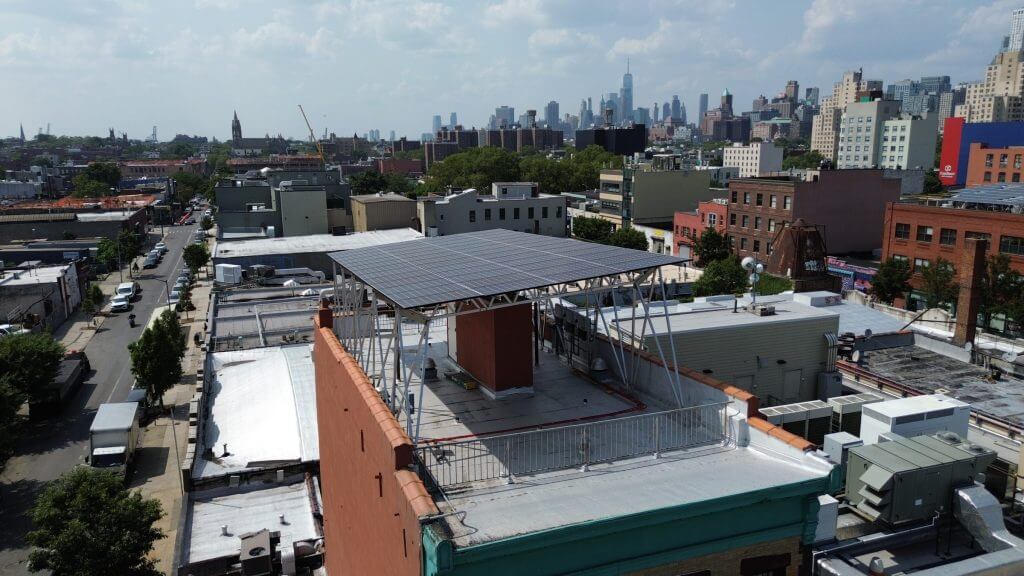
“We started Brooklyn SolarWorks because we wanted to build solar where we lived,” Brooklyn SolarWorks President and Founder Gaelen McKee said. “We’re a very community driven company and the community has been good to us, so we wanted to give something back.
The CHiPS project was a great opportunity for us to help a local non-profit save some money on their power bill while also giving us the satisfaction of seeing an awesome solar canopy every time we drive down 4th Ave.”
How will CHiPS use its solar?
CHiPS will be using its new solar system as an independent energy source to power its facilities. This includes its soup kitchen and its transitional apartments for mothers and their babies.
“In 2021, our focus has been all about ‘moving forward’ at CHiPS, in every possible way,” said the administrative staff at CHiPS. “We looked to solar as a way to update our operations to a greener, forward-thinking energy source that would also support our desire to be responsible stewards and citizens of the Park Slope and Gowanus communities.”
We’re incredibly proud of this project and so appreciative of the opportunity to continue spreading solar in our community. We look forward to continuing to connect with and provide solar to other community based organizations like CHiPS.
Questions? Reach out to our team at 347-318-4771 or schedule your free consultation.
Starting next year, Con Edison will be charging new solar customers a Customer Benefit Contribution (CBC) charge. This new charge is effectively a solar tax in New York City. While it will not significantly affect the investment in solar, we want to make sure our customers are aware of the upcoming changes.
Read on for what you need to know about the New York “solar tax.”
What is the CBC charge?
Starting January 1, 2022, Con Edison will be applying a Customer Benefit Contribution (CBC) charge to the electric bills of solar owners whose systems were interconnected on or after this date.
Note: If your system was installed prior to this date, you will not be charged for the CBC. You’ll continue to receive the full retail value of the energy produced by your system for the next 20 years.
The CBC charge is based on the DC nameplate rating, service class, and location of the solar system. We expect this “solar tax” to cost NYC solar owners $7-$10 per month.
Where did this solar tax come from?
Last year, Con Edison announced it would be making changes to its current Net Metering program. Some states have begun to do the same in order to address cost shifting. Utility companies claim that they need to charge their non-solar customers more money in order to make up for the revenue they lose from the Net Metering of clean energy.
To address cost shifting at the state level, NYSERDA announced last July that Phase One Net Metering (the program as it is now) will only be available for projects interconnected before January 1, 2022.
Making the switch to clean, solar energy is a significant financial investment that benefits the entire grid. However, it will now result in an extra charge from Con Edison. This charge is effectively a tax on solar in New York.

Is the CBC charge final?
This charge will unfairly target solar customers and therefore stunt the growth of solar in NYC, which undermines the city and state’s sustainability goals. For this reason, members of the solar industry are doing what they can to fight back. Brooklyn SolarWorks, NYSEIA, and a number of other solar companies and organizations in New York have filed comments with the state on the charge.
The current Net Metering program has been instrumental in the spread of solar throughout NYC; yet this new charge disincentivizes the investment in solar. When it comes to cost shifting, the truth is that solar owners account for only about 1% of total electric customers in the state. Thus, any cost shifting that occurs cannot be very significant. Further, making the switch to solar is an investment that has considerable economic and environmental benefits for both Con Edison and the city as a whole.
The CBC is just another barrier to residential solar in our city. We believe solar should be becoming more accessible to New Yorkers, not the other way around.
Will the CBC charge affect my investment in solar?
While the potential savings from the current Net Metering program will decrease, it is important to know that the return on your investment in solar will not change significantly.
Though payback periods may vary when factoring in these new changes, the investment in solar is still worthwhile, for yourself, for your community, and for the planet.
With that said, energy policy in New York is always evolving. If you’re considering solar, we urge you to move forward as soon as possible to avoid any potential uncertainty.
Take charge of your electric bill and help spread solar! Talk with us about making the switch to solar today.
If you’re considering solar, you’ve most likely heard that going solar in NYC is too expensive. Perhaps you’ve heard solar panels won’t hold up during hurricanes or that they make homes look unappealing.
Don’t worry, we’ve heard the same. We’re here to let you know that these ideas are totally false! In this article, we’ll go through the most common solar misconceptions we hear and prove them to be pure myths.
Myth: Flat roofs can’t go solar.
For many years, this was a common belief in the solar industry. Most solar contractors in the area had embraced methods and practices that were developed for the suburban customer and home. As a result, the industry as a whole avoided the borough’s dense residential neighborhoods and iconic flat roof townhomes.
We’ve built Brooklyn SolarWorks as a business to close this gap. This has meant pioneering entirely new design and residential solar installation methods that match the unique characteristics of the local housing stock. We’ve also acquired a mastery of the City’s complex code, zoning and permitting rules. We specifically developed our most famous innovation — the patented, award-winning Brooklyn Solar Canopy — to make solar viable on townhome roofs.
When other installers say no to flat roof solar, we say yes!
Myth: Solar systems cannot withstand freezing temperatures, hail, hurricanes, or other extreme weather.
BSW’s solar panel provider REC tests their panels thoroughly against a broad range of extreme weather.
BSW systems have also undergone extensive testing: our canopy can hold around 48,000 pounds. This means it can withstand a blizzard’s worth of snow and over 120 mph winds — exceeding the city’s wind requirements. (For reference, when Hurricane Sandy made landfall in New Jersey, the highest recorded wind speed was 80 mph.)
To ensure maximum stability, we bolt our systems to the roof’s underlying rafters. We use a UL listed product called OMG to attach our solar components to the roof decking. These watertight connections ensure stability in times of harsh NYC weather.

Myth: There aren’t any financial benefits to going solar in NYC.
Going solar is absolutely worth it! As a New Yorker, you can take advantage of some of the best solar tax incentives in the country.
But that’s not all: going solar will reduce (or eliminate!) your electric bill. While solar won’t disconnect your home from Con Edison, it will decrease your dependence on energy coming from the grid.
Your solar system will likely produce more energy than your home even needs. This excess energy will be sent back into the grid, but ConEd will return it to you in the form of retail energy credits applied toward your future electric bills (this is a program called Net Metering). These credits can drastically reduce your monthly payments to ConEd or even eliminate them altogether. Making the switch to solar just makes financial sense.
Myth: Solar in NYC is too expensive.
The solar tax incentives available to New Yorkers can cover around 60 percent of the cost of your solar system come tax season.
But for that remaining 40 percent, the way you pay is up to you. There are a number of financing options available, such as New York State-backed loans. We like to tell our customers that if you’re paying taxes and your electric bill, you can afford to go solar.
The total cost of our systems average around $35,000, but vary depending on system size. While this number may seem a bit out of reach, it’s more affordable than you think.

Myth: Solar systems look unappealing and they’ll make your home unattractive.
We respect that homeowners may have aesthetic concerns. That’s why we customize our solar system designs to fit our customers’ needs.
Our canopy design is our pride and joy. It’s a patented, award-winning design that we created in collaboration with Situ Studio to make solar accessible on city rooftops. Many of our customers love it because it allows you to create a living space on your rooftop while still producing energy from the sun.
But canopies aren’t everyone’s cup of tea, and sometimes aren’t the best option for every roof anyway. Tilt racks, for example, are angled, closer to the roof surface, and can be installed so that the system is not visible from the street.
If you’re still not convinced, a 2019 study by Zillow found that solar increases home resale value by an average of 4.1% across the country. The study found that the solar boost was higher in the New York metro area than the national average, topping out at 5.4%. The NYC solar premium was 1.8% more than it is statewide. That’s an extra $23,989 in value for solar home owners in the five boroughs. Sounds like solar is pretty attractive after all!
Myth: Solar systems require a lot of cleaning and maintenance.
Solar systems require very little maintenance. You don’t need to clean your panels. Your solar array is angled so that rainwater can run off naturally, taking with it any build up and debris. If you do choose to clean your panels, however, avoid harsh detergents and metal or hard plastic brushes that could scratch the glass.
You also don’t need to clean snow off of your panels and we don’t recommend it. The power you may miss out on during a snowstorm is minimal. It’s not worth risking a trip up to an icy rooftop.
Myth: Solar doesn’t work when it’s not sunny.
While it’s true that your solar system will produce less when it’s very cloudy or snowy, Con Edison’s Net Metering program allows you to utilize solar even when the system’s not actively producing.
In short, your system produces a lot of excess energy when it’s sunny. Con Ed will return this excess energy to you in retail energy credits. You can use these when the sun’s not shining at night or on a cloudy day.
Myth: The area under the solar canopy has to stay empty.
One of the great things about the canopy design is having the ability to utilize the space underneath by creating your own rooftop living space. Our customers have created some incredible Green Roof spaces over the years.
Myth: Landmarked homes can’t go solar in NYC.
Landmark status used to be considered disqualifying for solar, but not anymore!
For these homes, solar installations must be completely invisible from all angles on street level, front and back. We’ve developed zero visibility installation methods, and have mastered the City’s complex landmarks design and application rules.
As a result, solar is not only possible on these formerly “no go” properties, but landmarked homes are now among our most common project types in Park Slope, Bedford Stuyvesant, Sunset Park and other historic neighborhoods.
Myth: Solar canopies can be installed closer to the roof surface.
Our canopies are elevated to nine feet above the roof’s surface to comply with current FDNY fire code. This one is out of our hands!
Myth: BSW chooses not to offer solar battery storage.
This is another design factor that is unfortunately out of our hands. FDNY has specific policies surrounding solar battery installations in residential buildings that currently make obtaining a permit impossible. Although we can’t install batteries now, all BSW systems can be retrofitted to accommodate a battery once they are allowed.
Also, we consider Con Edison’s Net Metering Program to be a kind of virtual battery. Net Metering is a billing mechanism that allows you to store your excess solar energy as retail energy credits to be used at a later date. So, you can still utilize your solar production even when the sun isn’t shining, just like a physical battery.
There are countless myths about NYC solar out there. Nevertheless, going solar will always make sense: for your wallet, for your home, and for the planet.
Making the switch to solar is a big decision. That’s why we’re here to clear up any misconceptions and answer any questions you have throughout the process.
Questions? Get in touch with a member of our team now.
Are you ready to flip the switch to solar? Schedule your free consultation today.
Company launched in 2015 also expands solar rooftop footprint beyond Brooklyn into Manhattan and Queens with 80+ installs.
It is extremely fulfilling to know that we’ve installed 1000 solar systems here in NYC – each one has been a gratifying experience of “flipping the switch” to clean solar energy,” said T.R. Ludwig, CEO and Founder, Brooklyn SolarWorks.
BROOKLYN, N.Y. (PRWEB) SEPTEMBER 01, 2021
Brooklyn SolarWorks, a leading residential solar system design and installation provider, today announced the completion of its 1,000th installation with many hundreds of those installations custom designed to meet stringent landmark property rooftop codes in New York City (NYC). Originally developed as a NYC-specific product to make solar viable on the most challenging townhome roofs, the company’s patented, award-winning solar energy systems are now available everywhere in the U.S. through its subsidiary Brooklyn Solar Canopy.
Launched in 2015 with a hyper local focus on Brooklyn, Brooklyn SolarWorks has since expanded its “solar rooftop footprint” into Manhattan and Queens with 80+ installations. The company has also been a consistent jobs generator and made a significant impact on the “new economy” in NYC by employing more than 50 local team members.


“It is extremely fulfilling to know that we’ve installed 1000 solar systems here in NYC – each one has been a gratifying experience of “flipping the switch” to clean solar energy, said T.R. Ludwig, CEO and Founder, Brooklyn SolarWorks. “Our customers are the cornerstone of our business and we are so thankful for their support and engagement with their projects. Our amazing team of solar warriors brave the NYC landscape daily and have changed this city one rooftop at a time. We look forward to this new chapter of Brooklyn SolarWorks by spreading solar power throughout NYC and making it as accessible as possible for all New Yorkers. We are grateful for the opportunity to be a part of the clean energy transition now and in the future.”
In addition to the 1,000th installation and strategic expansion into the other boroughs of New York City, Brooklyn SolarWorks also announced the following significant milestones and key initiatives:
- Providing ongoing support for local non-profit organizations like CHiPS, a soup kitchen and shelter for homeless mothers located in Park Slope, Brooklyn. Brooklyn SolarWorks installed a rooftop solar energy system at the organization’s location as part of New York State’s Inclusive Community Solar Adder program
- CEO/Founder T.R. Ludwig provided solar industry thought leadership in a New York Times column on ways individuals and households can reduce their carbon footprint(s).
- Ludwig also co-authored a bylined article “Urban Solar Can Interconnection Can Be Modernized, Simplified and Standardized” that was featured in Solar Power World.
Brooklyn SolarWorks’ expansion into the other four boroughs of NYC included installations and educational efforts on the benefits of solar power in the world famous Harlem neighborhood of Manhattan.
“Harlem, one of NYC’s most culturally rich and historic neighborhoods, is full of flat roof residential buildings and homeowners that are interested in switching to clean energy,” said Ludwig. “It is well known that communities of color, like those found in Northern Manhattan, are disproportionately impacted by air pollution and greenhouse gases produced by burning fossil fuels. Replacing conventional energy sources, one building at a time, can impact the entire city. That’s why our canvass team has been regularly speaking with individuals in Harlem to spread information regarding the process of going solar in NYC and the rebates that can be claimed during tax season.”
Brooklyn SolarWorks has also been an active participant in New York State’s “CarbonZero” initiative, which aims to eliminate greenhouse emissions across the state by the year 2050. To date, Brooklyn SolarWorks has produced more than 12 million kilowatthours (kWh) of clean energy, which is equal to:
- The carbon sequestered by 3,438 acres of US forest in one year
- Greenhouse gas emissions from 7,502,994 miles driven by a passenger vehicle
- Co2 emissions from 3,101,848 pounds of coal burned
- Co2 emissions from 341,375,807 smartphones charged


For more information or to schedule a free consultation, please visit https://www.brooklynsolarworks.com.
About Brooklyn SolarWorks
Founded in 2015 Brooklyn SolarWorks is the borough’s leading residential solar system design and installation provider with 1,000+ systems completed. Our continued success owes to our skilled and energetic team; a locally tailored approach to design and construction; an unparalleled mastery of city codes and regulations; and our hyper-local focus on the unique needs and expectations of the New York homeowner and sophisticated real estate markets. For more information, please visit https://www.brooklynsolarworks.com.
Read the full Brooklyn SolarWorks press release here.
QUESTIONS? GET IN TOUCH WITH A MEMBER OF OUR TEAM NOW.
ARE YOU READY TO FLIP THE SWITCH TO SOLAR? SCHEDULE YOUR FREE CONSULTATION TODAY.
Solar Power World June 18, 2021 | By T.R. Ludwig, CEO and founder, Brooklyn SolarWorks and Colin Mattox, head of product marketing, ConnectDER
Over the past decade, while solar has boomed in rural and suburban areas, urban solar has lagged. It’s not a mystery as to why. Urban solar comes with many challenges — higher, flatter, smaller roofs, more valuable real estate, onerous permitting, among many others. Most of those challenges stem from the essential truth that density presents building and construction difficulties.
Finding solutions to these challenges and making urban solar work offers tremendous promise. The benefits of building and siting solar where the energy demand is are massive.

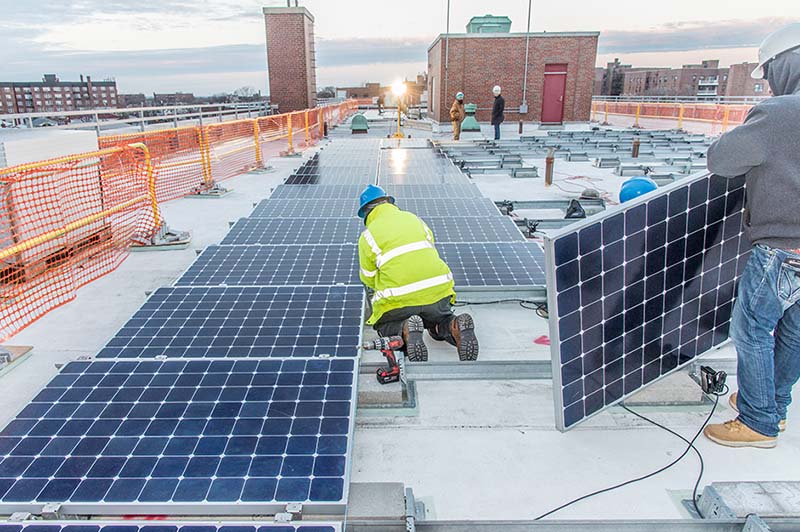
A recent study, the Local Solar Roadmap, found that if we invest in local solar and energy storage and other distributed energy resource (DER) technologies — on schools, businesses, apartment buildings, and homes — we can save $473 billion on electricity bills between now and 2050. The researchers found that scaling local solar is the most cost-effective way to meet our climate goals. It will also boost resilience as local communities and businesses contend with wildly variant weather patterns — increased storm severity, more devastating wildfires, and longer and stronger hurricane seasons — stemming from the climate crisis.
This research confirms years of research and data showing the benefits of distributed energy resources and local power.
But how do we overcome these challenges and tap into these benefits? The quick answer is that there is no one magic solution — instead, we need dozens of solutions. And solar installers have been working hard developing those solutions, from solar canopies to community solar gardens to micro-grids and many innovations that have made urban solar more successful than ever.
Another important innovation is modernizing, standardizing and simplifying the interconnection of new solar systems.
Right now, many urban solar installation interconnections require substantial amounts of additional electrical work. All of those extra connections and wiring equals work, time, money, diminished safety and increased permitting — and in urban solar, that additional cost and time could be prohibitive.
Right now, Con Edison, the utility for New York City and Westchester County, is running a project using meter collars from ConnectDER to standardize, modernize and simplify interconnection. Modern meter collars can accelerate the transition to urban solar as a standardized connection point for rooftop solar systems, allowing installers to avoid costly circuit-breaker panel upgrades and time-consuming wiring work. The meter collars also provide the data collection and computing power of a typical smart meter and an individual home’s solar system.
The solar installers detach the home’s meter, hook up our meter collar, replace the meter and then plug the inverter’s power directly into the meter collar. The interconnection leaves the homeowner offline for a mere five minutes instead of several hours for a standard install. Simple for the installer, smooth for the customer and easy on the home.
This deployment project is done in partnership with NYSERDA. Right now, the units are free of charge to installers and will be delivering valuable data, including forecasting solar production — providing Con Edison with precise, real-time measurements of solar generation on distribution circuits that may face disruptions from the utility’s growing share of customer-owned solar. This current effort follows an earlier 300-unit pilot installation launched in 2017, which achieved savings of between $400 and $1,500 per installation.
All of these benefits — time, money, aesthetics, safety, increased information sharing — can grow exponentially as cities adopt more DERs. Importantly, the benefits flow to all parties of the residential solar installation — the customers and installers save time and money. At the same time, utilities gain valuable information that allows them to manage DERs more effectively.
Helping make urban solar work holds massive promise: Billions in savings, millions of jobs and tons of reduced pollution. Modern meter collars that simplify, modernize and standardize interconnection can be another key solution to overcoming urban solar’s challenges. This Con Edison project points the way toward the urban solar future.
Originally published by Solar Power World.
At our core, Brooklyn SolarWorks is dedicated to furthering clean energy solutions for New Yorkers. We strive to make sure that solar and other sustainable alternatives are accessible to the people in our community that want them. When there’s an opportunity to help a local non-profit utilize solar in some capacity, we’re happy to help.
That’s why we did not hesitate when KoKo NYC, a children’s arts education organization, inquired about installing solar on their community workshop called the Tiny House Project.
KoKo NYC’s Tiny House Project
KoKo NYC is the arts education program of Open Source Gallery, a non-profit arts organization based in Brooklyn. They provide art-based science and engineering classes to schools and after-school programs. Their goal is to empower kids to see potential all around them, to see their own ideas come to fruition, to feel a sense of ownership in their work and to make connections between art and science.
To date, KoKo NYC’s programs have reached over 8,000 children through local schools, the Brooklyn Public Library, and CAMBA Flagstone Family Center. They also partner with organizations like the MoMA, the Brooklyn Museum, and the Children’s Museum of Manhattan.

KoKo NYC’s art programs use repurposed materials as a basis for their projects to inspire environmental awareness and imagination. One of these programs is the Tiny House Project, which is just that. It’s a house designed by kids and built with the goal of making KoKo’s classes more accessible to different areas of the city.
The mobile workshop is totally off the grid. This means the students have to experiment with alternative power sources like wind and bike generators and water collection tanks. But one component was still missing: solar energy.
And that’s where we came in.
How did BSW help?
First, our team had to determine how much energy was necessary to meet the needs of the program. Their goal was to produce enough solar to power their electric tools, some lights, and occasional engineering projects that students create.
For this project, BSW chose to use an LG panel which features tempered glass and an aluminum frame. The device can handle surges from power tools, medical devices, and home appliances, including full-size refrigerators.


The structure had a few wood beams beneath the aluminum which we were able to fasten our rail to. We waterproofed the holes as well as some other existing holes. There were no difficulties attaching the modules to the roof. We installed the system in a matter of 20 minutes.
The Goal Zero YETI 1500X Portable Power Station connects to the panel and is very self-contained. This allows the Tiny House to stay portable. Part of Tiny House’s mission is to show students that it’s possible to go off the grid and remain mobile. This scenario is ideal because the power station stores the harnessed solar power which can be accessed any time, anywhere.
How is Tiny House using their solar?
With their new solar, KoKo NYC and the Tiny House are ready for a summer filled with learning, sustainability, and fun.
Because of their new mobile power, the space is being prepared for summer activities using power tools — even while parked in an empty lot in South Slope or at the Dredger’s Boathouse in Gowanus (where it will be located during the week this summer). Tiny House will be home to KoKo’s Summer Soapbox Workshop and Mini Destroy & Construct Camp as well as the organization’s participation in the Green New Deal Superstudio, where solar will power the tools students need to build Ambassador Carts.

The Green New Deal Superstudio is a national conversation about how the framework of the Green New Deal can be translated into actual projects. KoKo is collaborating with Dilly Dally Projects to showcase KoKo’s Backyard Utopia project in mobile display boxes made from reclaimed materials. Backyard Utopias promote the practices of restoring and remediating soil, testing the potential of cleaning polluted waterways, and filtering rainwater to create drinking water.
“Thanks to Brooklyn SolarWorks and their awesome team, KoKo’s Tiny House has mobile solar power,” KoKo NYC’s Executive Director Monika Wuhrer says. “The battery has not gone under 80 percent, even after using all kinds of machinery to build a platform and a roof water collection system. It’s impressive how much power the solar panel generates and how much the small battery can store.”
BSW in the Community
Brooklyn SolarWorks was founded in 2015 with the goal to make solar appealing, easy and available for Brooklyn’s urban homeowners. We’ve installed more than 3,000 systems across Brooklyn, Manhattan, Queens, and the Bronx and are proud that NYC homeowners are continuing to invest in solar energy.
But we understand that homeowners aren’t the only members of our community who want to actively use solar instead of relying on fossil fuels. That’s why we look to support local non-profit organizations that do so much for Brooklyn, but don’t necessarily have the budget to invest in clean energy. Nonprofits dedicated to education & youth achievement, community development, health & human services, sustainability, and cultivating public outdoor spaces are our first priority when it comes to engaging in complimentary solar installations.
As we continue to solarize NYC, we look forward to connecting with and providing solar to community based organizations like KoKo NYC.
Questions? Reach out to our team at 347-318-4771 or schedule your free consultation.