How Well Do Solar Panels Work in NYC During the Winter?
Dec 17, 2025One of the biggest myths about solar panels is that they don’t work in the winter. Solar panels need light, not heat, to produce electricity, which means they can still…


Subscribe to our monthly newsletter to keep up with us and learn about the latest in solar and sustainability in New York City.
If you’re a Con Edison customer in New York City, going solar isn’t just possible—it’s easier than you might think, especially with an experienced local installer.
At Brooklyn SolarWorks, we specialize in solar panel installation for New York City rooftops and have connected thousands of systems to the Con Ed grid. We’ll handle the entire process for you, from submitting your interconnection application to coordinating the final inspections.
In this guide, we cover everything you need to know about going solar as a Con Ed customer.
When you go solar as a Con Edison customer, your solar panels—and your home—will be connected to the electric grid. This is called grid-tied solar.
You pay a basic service charge to maintain your grid connection, which means your bill will never be $0, even with solar panels (more on that below). The small charge, however, is worth it for two important reasons:
Getting connected to the Con Ed grid involves several steps. Our team will handle all of this for you, so you don’t have to worry too much about the details.
Here’s what the process includes:
Unfortunately, your solar panels will not work during a Con Ed outage. All grid-tied solar panels shut down automatically during a power outage to prevent them from sending unexpected surges of electricity into the grid and putting utility workers at risk.
Net metering is, essentially, selling solar-generated electricity to Con Ed in exchange for credits on your bill. When you generate more electricity than you need, it’s automatically sent to the grid. Then, when you need more than you produce, you take it from the grid. Your meter keeps track of what you take and what you send, and you pay the net difference every month.
Your credits roll over month to month, so you can bank them during the long, sunny summer days and use them to cover your higher electricity costs in the winter, when there’s less sunlight available for solar generation.
Your net metering credits are tracked on your monthly Con Ed statement, under a section titled “Your Net Meter Summary.” You’ll see a log of credits for recent billing periods, the kWh you’re being billed for (if any—0 in the example below), and the total amount of credit being carried forward to the next billing period.

In 2022, Con Ed introduced a new monthly fee for solar customers, called the Customer Benefit Contribution (CBC) charge.
This charge was implemented to ensure that solar customers contribute fairly to public benefit programs, including the Clean Energy Fund, utility energy efficiency programs, and utility low-income programs.
Your CBC charge is calculated based on your system’s size, and the rate varies by utility. In 2025, the CBC rate for Con Edison customers is $1.84 per kW a month. For a 7 kW system, that comes out to $12.88 a month.
Because of the new CBC charge, as well as net metering changes in other states like California, there’s been some concern that net metering is going away in New York. Fortunately, this is not the case. Net metering is safe in NYC for the time being.
However, policy changes are always possible. If you’re interested in installing solar, your best bet is to do so now, before any potential changes are implemented. You’ll be locked into Con Ed’s current net metering policy for 20 years, so if net metering is eliminated in New York City in the coming years, your savings will be safe.
As a Con Ed solar customer, you will still receive an electric bill every month. It will, however, be significantly lower.
Here’s an example of an electric bill for a Brooklyn SolarWorks Customer before and after going solar. They still owe a small amount, but their total dropped from $622.97 before solar to just $47.10 after installing solar panels!
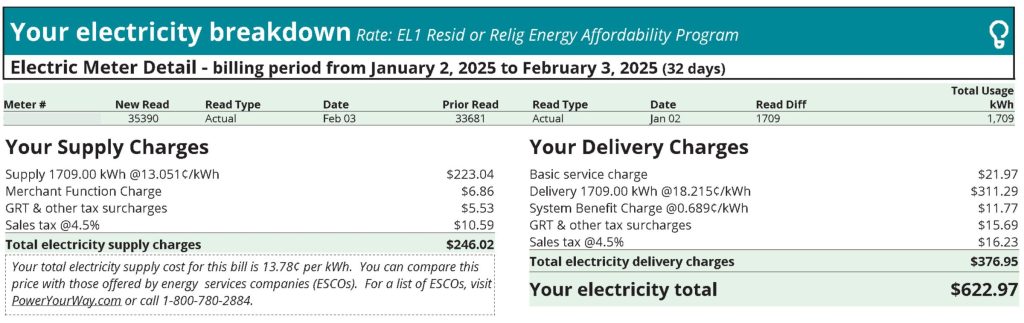
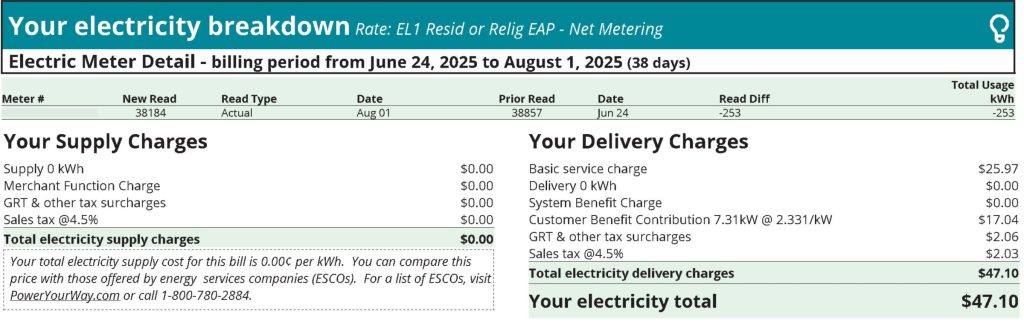
There are some charges that all Con Edison solar customers pay, even if you have solar panels. These include:
Electricity is already expensive, and rates are only going up. If you’re ready to take control of your Con Ed bill, reach out to Brooklyn SolarWorks today. We offer free, no-pressure consultations to help you decide whether solar panels make sense for your home in New York City.
One of the biggest myths about solar panels is that they don’t work in the winter. Solar panels need light, not heat, to produce electricity, which means they can still…
If you’re an NYC homeowner considering rooftop solar panels, questions like these may have crossed your mind: How do I store the energy my system produces? What happens at night…
If you’ve opened a utility bill lately, you know electricity costs are going up in New York City. The best way to avoid rising costs is by generating your own…