When it comes to installing solar panels on a New York City co-op building, there’s no one-size-fits-all answer. The solar potential of each building varies depending on factors like roof space, sunlight exposure, and building regulations.
However, with the right conditions, many NYC co-ops can successfully make the switch to solar energy, receiving significant benefits in the process. This blog will guide you through the key considerations and benefits of installing solar panels on your co-op building, helping you determine if solar is the right choice for your property.
Benefits of Solar for Co-Ops in NYC
Installing solar panels provides many benefits, making it a very attractive investment for co-op owners and residents alike. From complying with Local Law 97 and saving thousands on energy costs, solar energy is becoming essential for co-op buildings.
Reduced Electricity Costs
New York City has some of the highest electricity rates in the country. Going solar not only means significant savings on monthly bills, it also protects co-op owners and residents from annual rate hikes.
For co-ops, there are multiple ways to share the savings of solar. One plan allows residents to share energy by apartment unit through a community solar arrangement. The most common plan, however, is having the generated solar energy cover the building’s common area costs.
New York City’s Local Law 97 (LL97) requires buildings over 25,000 square feet, including co-ops, to significantly reduce their carbon emissions. There’s around 18,000 multifamily buildings in NYC that are also covered by LL97. Of these buildings, most are low-rise (7 stories or fewer) and either pre-war (built before 1940) or post-war (1940-1980). Overall, pre-war, low-rise buildings are the ones who have the most LL 97 work to do.
Solar energy is a powerful tool for meeting these requirements. By generating clean, renewable energy, co-ops can lower their carbon footprint, ensuring compliance with the law and avoiding the fines associated with non-compliance. Investing in solar now can help your co-op stay ahead of these regulations, contributing to a greener New York.
Climate Friendly
Solar energy is one of the most environmentally friendly power sources available. It produces no greenhouse gas emissions during operation, making it a key player in the fight against climate change. By adopting solar, co-ops can make a substantial impact on reducing the city’s overall carbon emissions. For residents who value sustainability, this can be a major selling point, reflecting the building’s commitment to environmental responsibility.
Increase Property Value
Installing solar panels can also enhance the property value of your co-op. As more buyers prioritize energy efficiency and sustainability, properties with solar installations become more desirable. Solar panels not only reduce ongoing operational costs but also signal a forward-thinking approach to property management. This added value can make your co-op more competitive in NYC’s real estate market, attracting potential buyers who are interested in long-term savings and environmental impact.
Does My Roof Qualify for Solar?
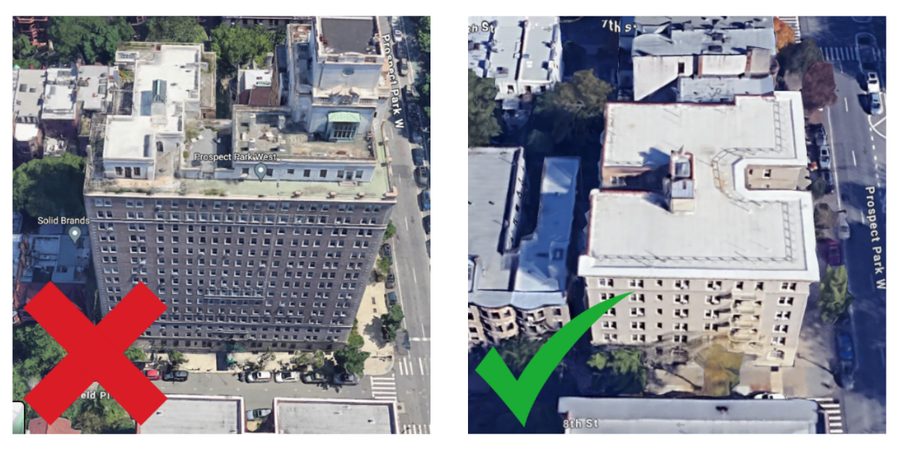
There are multiple factors that tie into what makes a roof qualified for solar. Generally, what we look for in a qualified co-op roof is open space with a good amount of sunlight. Too many obstructions on the roof, or too much shade from a nearby building, can prevent solar panels from producing sufficient power.
For any roof in NYC interested in going solar, including residential buildings and businesses, our local solar experts take a look at the roof and make sure that it fits the right conditions for you and your building to benefit from the solar system.
See if your building qualifies for solar today with a free quote.
NYC Solar Incentives for Co-Ops
New York City has some of the best solar incentives in the country for co-op buildings. Here’s a breakdown of the NYC solar incentives that your co-op could qualify for.
NYSERDA Rebate: The NYSERDA Rebate is currently at $0.80 per watt for co-ops whereas residential homes get $0.20 a watt. Only a limited amount of funds are available for this incentive. This will be filed by Brooklyn SolarWorks.
Property Tax Abatement (PTA): The PTA covers up to 30% of the solar system cost and will be paid through a reduction in your property taxes over a 4 year term. This will be filed by Brooklyn SolarWorks.
Federal Tax Credit: The Federal Tax Credit covers 30% of solar system cost and can be claimed by individual shareholders or unit owners on a prorated basis. It also includes dollar for dollar credit.
State Tax Credit: The New York State Tax Credit covers 25% of solar system cost and is also dollar for dollar credit. This credit is only available to owner-occupied units capped at $5000 per taxpayer.
Solar Design Options for Co-Ops
All co-op buildings are different. We have multiple solar design options available to fit your building’s design and energy needs.
Ballasted systems are installed with minimal roof penetrations. They’re low cost and low profile.
Our tilt rack system is installed directly to the roof deck. The solar array is split into sections to work around roof obstructions. This option increases system size compared to ballasted systems.
Our patented, award-winning solar canopy elevates solar panels 9 feet above the roof’s surface to avoid obstructions and FDNY fire paths. Canopies can increase system size substantially compared to tilt rack and ballasted systems.
NYC Co-Ops That Have Gone Solar
As New York City continues to become more sustainable, co-ops across the boroughs have been making the switch to solar. Here are a few examples:
Griswold Hall
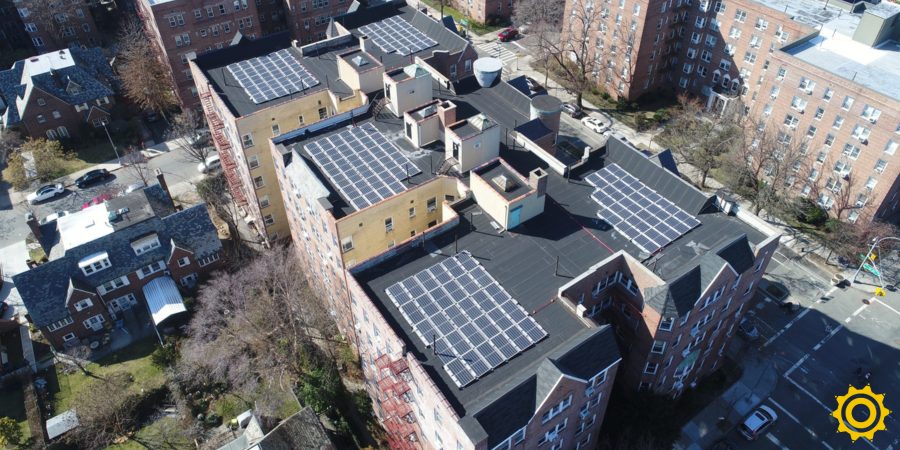
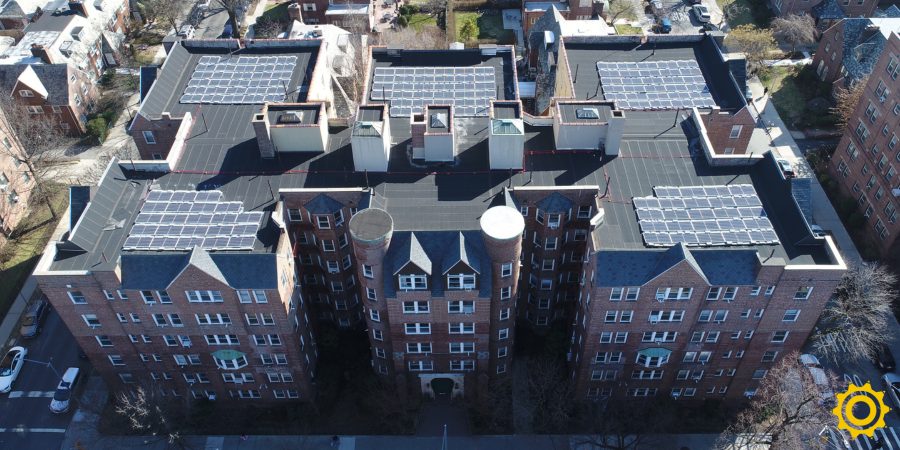
Installed in 2021, this 84 unit co-op installed a 140 panel solar system to fully offset their common area electricity costs. Located in a historic district of Jackson Heights, this building coordinated their solar project with a full roof replacement and opted for a low profile ballasted design. On top of energy savings and tax incentives, installing solar will also help reduce expected Local Law 97 penalties.
838 Park Place
Installed in 2017, this 8 unit co-op was the first affordable housing co-op in NYC to install an onsite community solar system! Using a hybrid design made up of 100 LG solar panels, this co-op was not only able to offset their common area electricity needs, but also provide bill savings to individual shareholders.
Frequently Asked Questions about Solar for NYC Co-Ops
What is the typical cost for a co-op to go solar?
Every system cost is different, as it depends on the size of your building and what your energy needs are. Larger, more complex projects incur higher costs when it comes to materials, labor and permitting resources.
However, the government incentives available for solar reduce your upfront costs by 75% or more. If you would like a breakdown of your co-op’s solar costs, start your solar journey today by speaking with our solar experts.
How does Landmarks approval work for solar?
If you live in a landmarked building, we need to abide by the Landmarks Preservation Commission’s historic preservation guidelines. Generally, this means the solar system cannot be visible from street level. We work with historic and landmarked buildings pretty often, and our permitting team are experts at navigating these regulations.
The first thing we do is a landmark study. This involves going on your roof to do a mock up of the system to see if it is visible from street view. If it’s good to go, we’ll apply for Landmarks approval, then begin applying for other permits.
What is the average solar installation timeline for a six story building?
The average timeline is 4 to 6 months once the contract is signed and a deposit is put down, assuming there are no other contractors we need to work with and your roof is ready for solar. Most of this time is allocated to getting the permits processed and approved. The installation of the system takes about 3-5 days.
If your building is landmarked, we’ll need an extra month to get approvals. If the building is larger, Con Ed requires additional studies to be done.
What if I’m not a board member? How can I get my building to go solar?
In multifamily buildings, there’s a lot of different decision makers. It can be hard to get projects like this approved when you are not on the board yourself. It’s important to note that we must work with your board in order to make a solar installation happen. We can only work with those who own, and make decisions for, the building.
We’re more than happy to present to your board, or we can share some resources that you can use to present the idea yourself. Our team has presented to co-op boards across the city and has plenty of experience guiding board members through the decision-making process.
Find Out if Your Co-Op Qualifies for Solar!
Taking the first step towards a more sustainable and cost-effective future is easier than you might think. Whether you’re motivated by reducing electricity costs, complying with Local Law 97, or increasing your property’s value, solar energy offers a range of benefits for co-op buildings in NYC. However, not every roof is suitable for solar, so it’s important to determine if your co-op is a good fit.
See if your co-op qualifies for solar today with a free personalized quote and see what you could be saving with solar.
Solar panels are becoming increasingly common in New York City, and for good reason. They pay for themselves through electric bill savings and, as Con Ed rates continue to rise,…
Solar energy is becoming increasingly affordable in New York City, thanks to a variety of unique incentives available to homeowners across the five boroughs. With the right combination of state…
Brooklyn SolarWorks Installs New York City’s First Residential Battery Energy Storage System Partnership with Briggs & Stratton serves as a trailblazer for New York City’s permitting framework for the siting…