When considering installing solar panels, one of the first factors to evaluate is your roof layout. While many roofs can accommodate solar power systems, certain designs—especially flat roofs—pose specific challenges.
Flat roofs, commonly found in New York City, typically have obstructions and restrictions that make solar installation more complex. The condition and layout of objects on your roof are significant in determining whether your home is a good candidate for solar.
Determining Solar System Size
The size of your solar energy system is crucial to maximizing efficiency and meeting your energy needs. To determine the optimal system size, we evaluate several factors:
Electricity Usage: Your past energy bills help us estimate your energy consumption and how much electricity you’ll need your solar panels to generate.
Available Roof Space: The amount of usable roof area influences how many solar panels can be installed.
Building Code Restrictions:Local regulations, including fire safety codes, limit where panels can be installed and may require leaving certain areas clear.
We aim to design a solar system that meets your energy needs while adhering to these restrictions. If space is limited after accounting for these factors, it may impact whether solar is the right choice for your home.
See if your home qualifies for solar with a free, no-obligation consultation!
What Factors Affect My Roof’s Compatibility with Solar?
When assessing your roof for a solar project, we take several key factors into consideration:
Roof Orientation
The orientation of your roof plays an important role in its suitability for solar and the amount of energy it can produce. South-facing roofs are ideal because they receive the greatest amount of sunlight throughout the day. However, east and west-facing roofs can also be good options depending on their exposure.
Roof Pitch
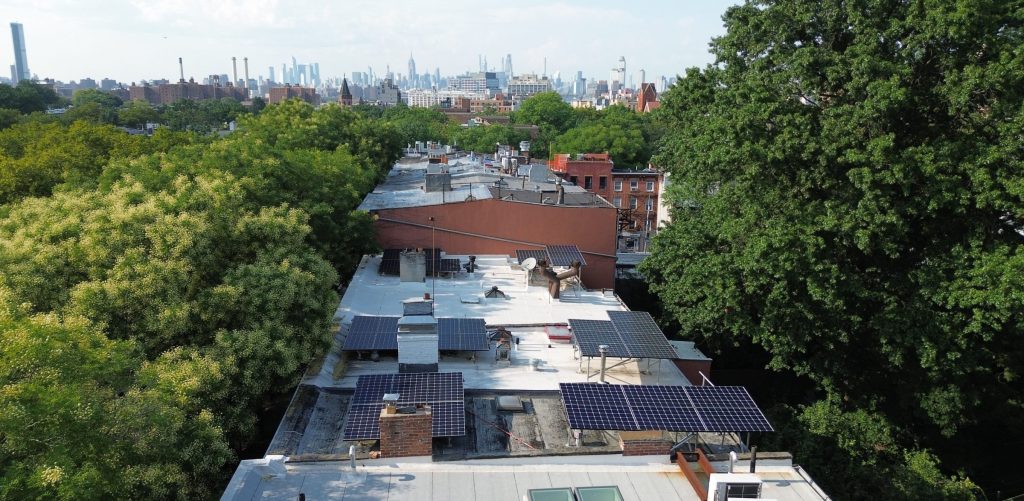
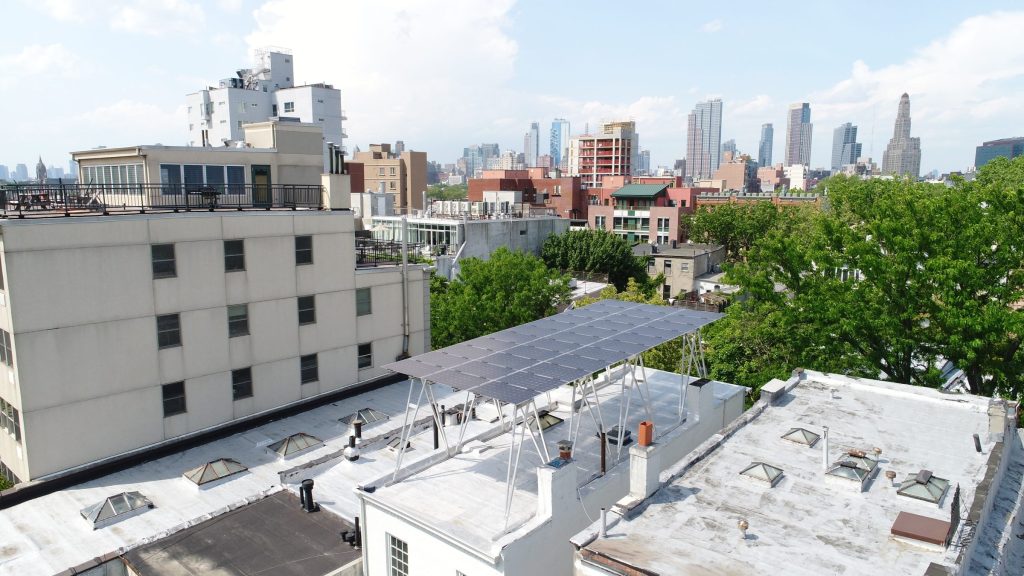
Roofs with a pitch are often easier to deal with when installing solar panels. These roofs tend to have fewer obstructions and can capture more direct sunlight. On the other hand, flat roofs—while common in urban environments—often come with restrictions and objects like HVAC systems or skylights that need to be worked around.
Pitched roof solar by Brooklyn SolarWorks in Flatbush, Brooklyn.
Flat roof solar by Brooklyn SolarWorks in Prospect Lefferts Gardens, Brooklyn.
Shading
If large parts of your roof are heavily shaded by trees or nearby buildings, it can significantly reduce the effectiveness of solar panel systems. A roof that is shaded for most of the day may not be a good candidate for solar.
To figure out how much sunlight a roof gets throughout the day, our Site Evaluation team uses a tool called a Suneye.
Structural Integrity
The condition of your roof and roofing material is a crucial factor. A strong, well-maintained roof is necessary to support the weight of the panels and ensure a system that lasts for decades.
How Does the Layout of my Roof Affect Solar?
Flat roofs often hold various objects that complicate solar panel placement. HVAC systems, skylights, roof hatches, decking, and dunnage can take up significant space and limit available areas for solar installation. These objects also have implications for complying with local building and fire codes.
Understanding Setback Requirements
Certain setbacks are required by building regulations to ensure safety and access. These restrictions may limit how close solar panels can be installed to objects on the roof or the roof’s edge, reducing the available space for panels.
Required FDNY Fire Paths
In New York City, the FDNY mandates a clear fire path on flat roofs. This 6-foot-wide path, stretching from the front to the back of the roof, is designed to give firefighters safe access in case of an emergency. Ensuring compliance with this regulation often limits available space for solar panels.
A flat roof solar system design that shows roof obstructions and the FDNY fire path.
Historic Preservation Regulations
For homes located in historic or landmarked districts, additional regulations may apply. Solar panels cannot be visible from the street in such areas, making certain options, like solar canopies, less accessible.
Three historic Brooklyn brownstones with solar tilt rack systems that were eligible to claim the NYS Historic Tax Credit.
Solar Design and Installation Methods for NYC Buildings
Given the challenges of installing solar in urban environments, we offer several solutions tailored to the unique needs of New York City roofs.
Solar Canopy
With the help of our sister company, Brooklyn Solar Canopy, we created a solar canopy system that was designed with NYC’s flat roofs in mind. It elevates the solar panels above roof obstructions and designated fire paths, allowing for efficient use of limited roof space and opening up the opportunity of solar for more homeowners around the city.
Solar Canopy System
Tilt Rack
Tilt racks allow us to split the solar array into smaller sections, working around obstructions like HVAC units and maintaining required fire paths. This design can also be installed with minimal visibility from the street, making it a great option for buildings with aesthetic or historic concerns.
Solar Tilt Rack System
Ballasted System
For larger buildings (like co-op or commercial buildings) with wide-open roof space, ballasted systems are an excellent option. These systems use weights to hold down the solar panels without penetrating the roof membrane, preserving the roof’s structural integrity. However, they are heavy, so the roof must be strong enough to support the additional load.
Ballasted Solar System
Explore Solar Solutions Tailored for Your Roof
Whether you have a flat roof, pitched roof, or any unique configuration, Brooklyn SolarWorks offers a range of solutions tailored to meet your home’s needs for clean energy. Every roof is different, and that’s why we survey every roof before proceeding with an installation.
Get started with your free solar consultation today to see if your roof is a good fit for solar and to see how much you can save!
Solar panels are becoming increasingly common in New York City, and for good reason. They pay for themselves through electric bill savings and, as Con Ed rates continue to rise,…
Solar energy is becoming increasingly affordable in New York City, thanks to a variety of unique incentives available to homeowners across the five boroughs. With the right combination of state…
Brooklyn SolarWorks Installs New York City’s First Residential Battery Energy Storage System Partnership with Briggs & Stratton serves as a trailblazer for New York City’s permitting framework for the siting…